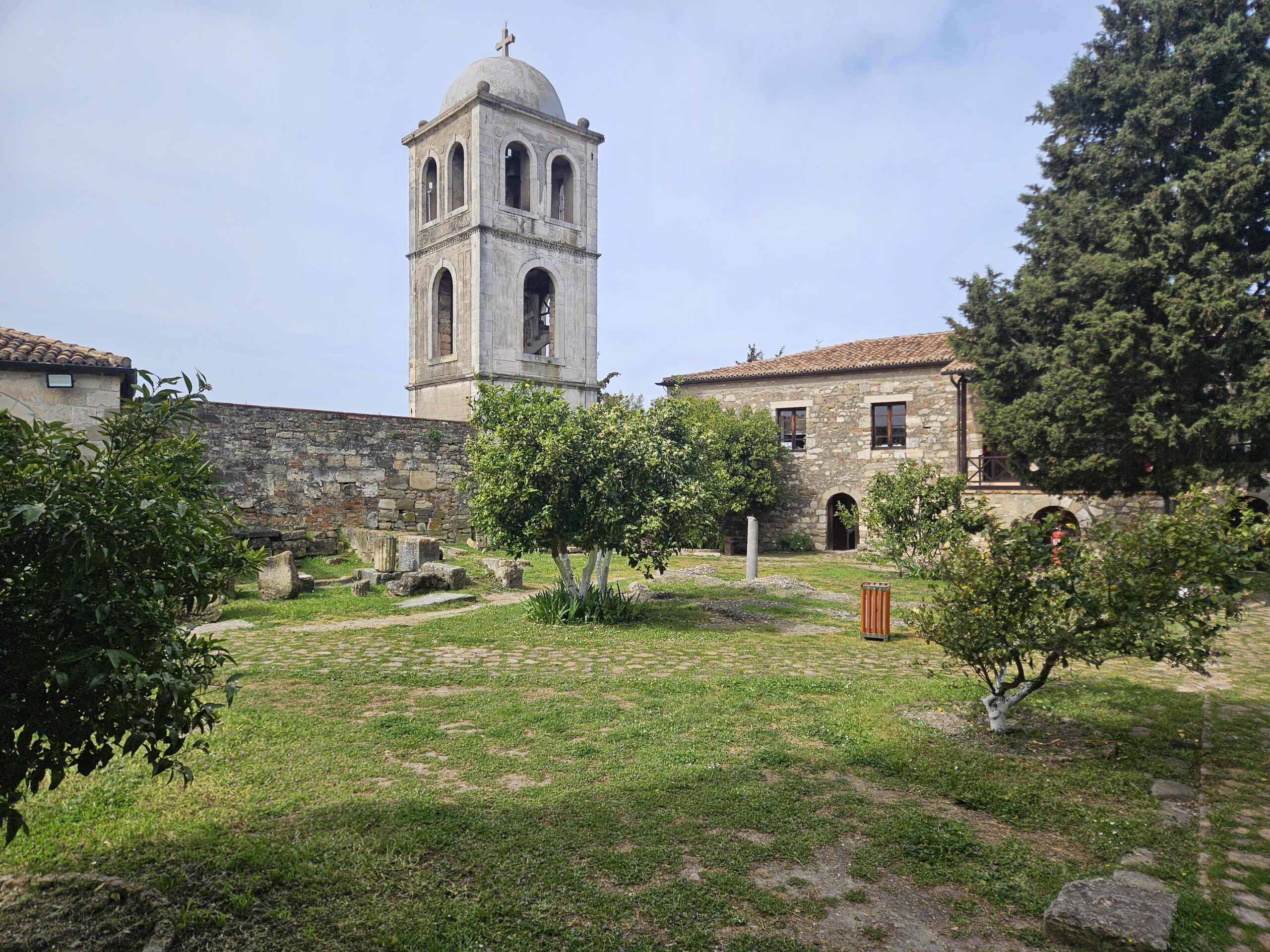
Apollonia & Berat
Two Places Not on Your Radar. But They Should Be. Yesterday I touched almost 2,600 years of history in a single day. Not as a metaphor — literally. My hand on the stone of a bouleuterion from the 2nd century AD. My shoes on the cobblestones of an Ottoman fortress town where people still live today. The feeling that comes with it is hard to describe. It’s not awe in the classical sense. It’s more like the silence that arrives when you realize how laughably short your own timeline really is.
Apollonia — The City That Shaped Augustus
Apollonia was founded around 600 BC by Greek settlers from Corinth — on a hill above the present-day village of Pojan, in western Albania, about 12 kilometers from the Adriatic coast. It grew rich on the slave trade, agriculture, and a harbor said to hold a hundred ships at a time.
What I didn’t expect: the sheer silence. A handful of other visitors, dogs dozing between the ruins, and that strange contrast between the communist bunker ruins from 1967 — around 400 concrete bunkers left behind by heavy machinery on the ancient city grounds — and the Doric columns rising up between them. This was no museum. It was a layering of eras, uncommented upon.
Famous visitors in Apollonia
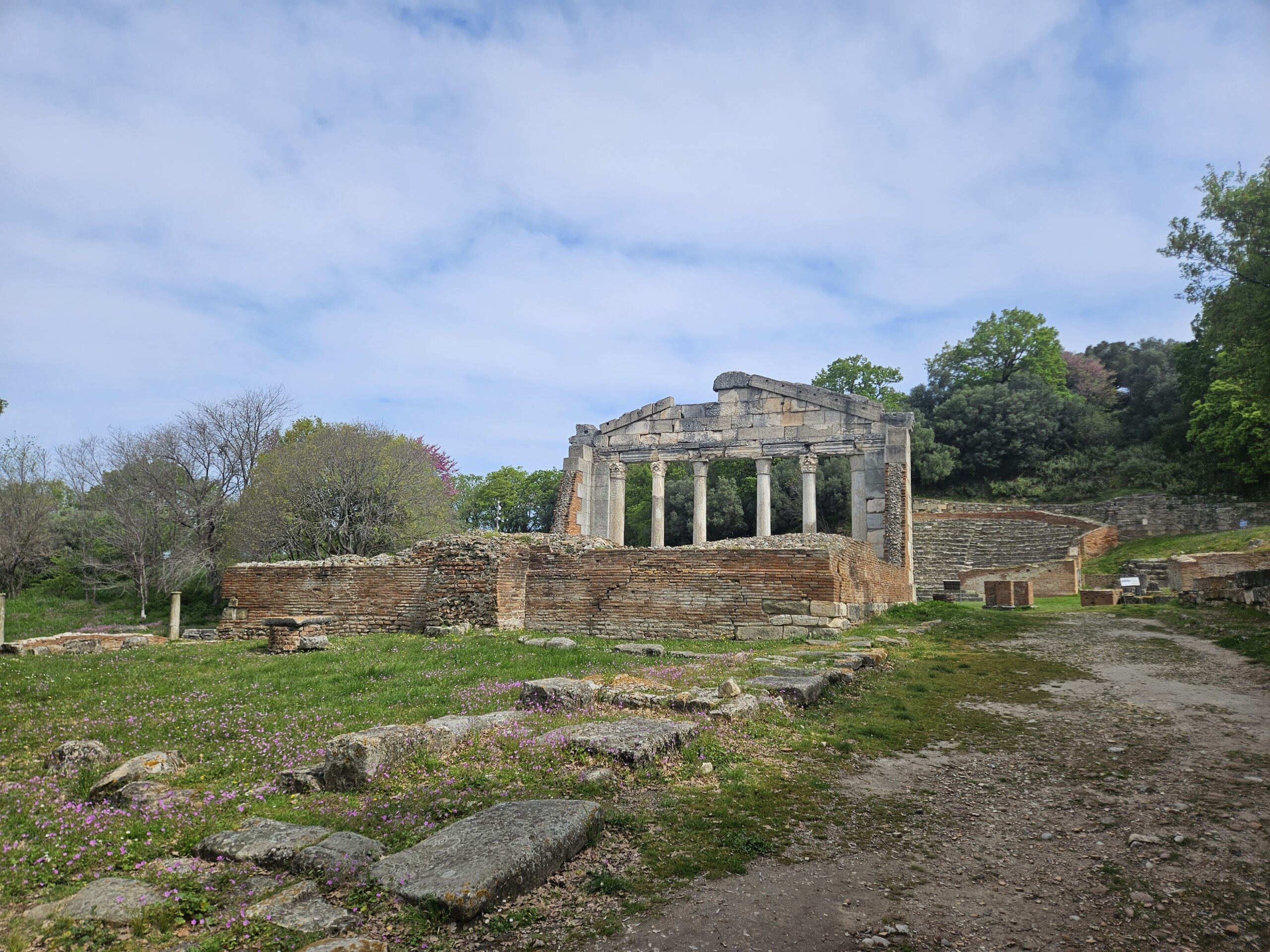
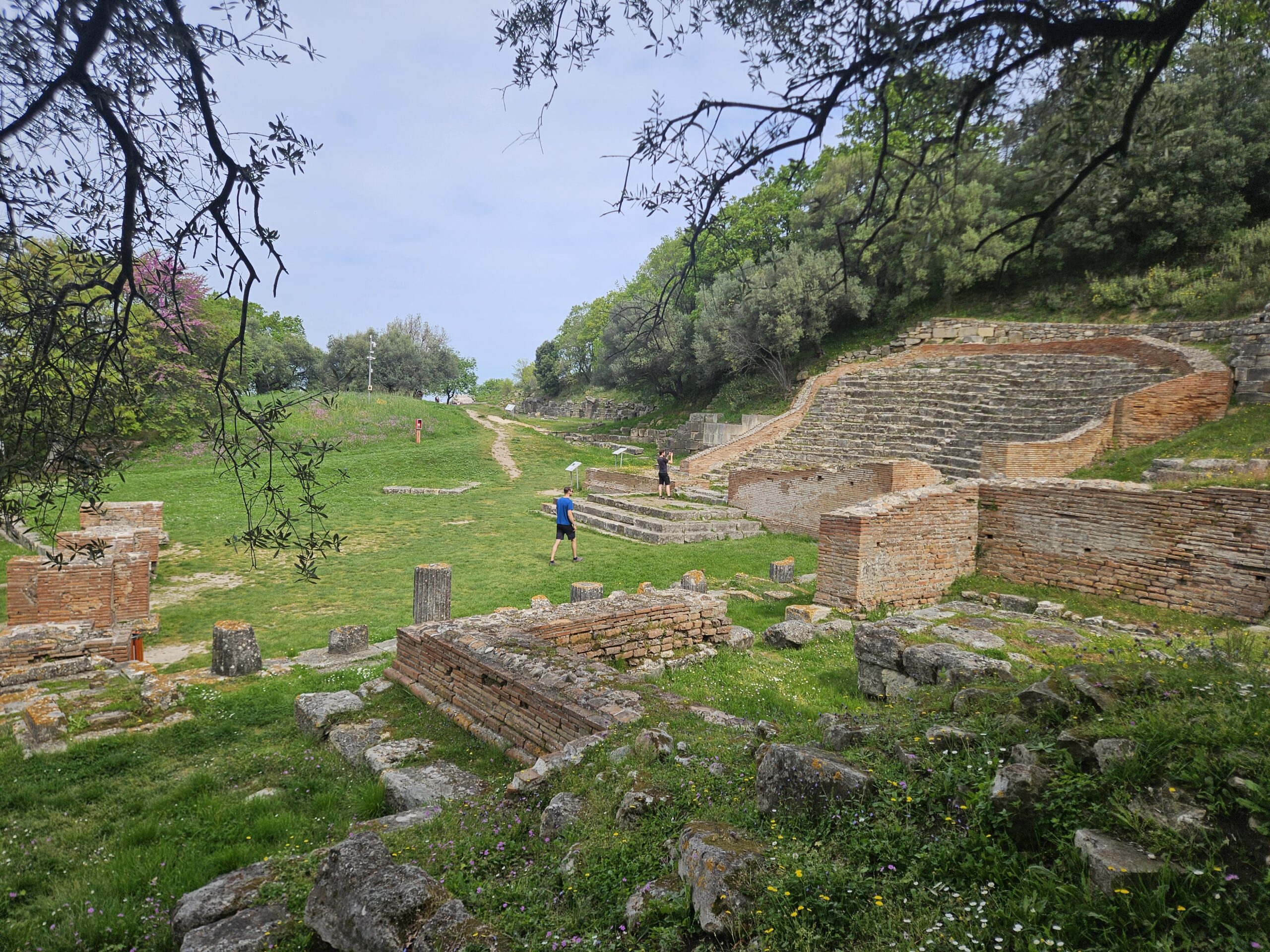
The most famous visitor to Apollonia was, by the way, no tourist. Gaius Octavius, the future Emperor Augustus, studied here in 44 BC. The city was at that time one of the most important centers for Greek philosophy, rhetoric, and military training in the entire empire. Cicero reportedly called it a “great and important city.” What remains can still be walked today — the Great Stoa with its octagonal Doric columns, the Odeon with 16 preserved rows of seating, the temple, the agora. Estimates suggest that only about ten percent of the original city has been excavated so far.
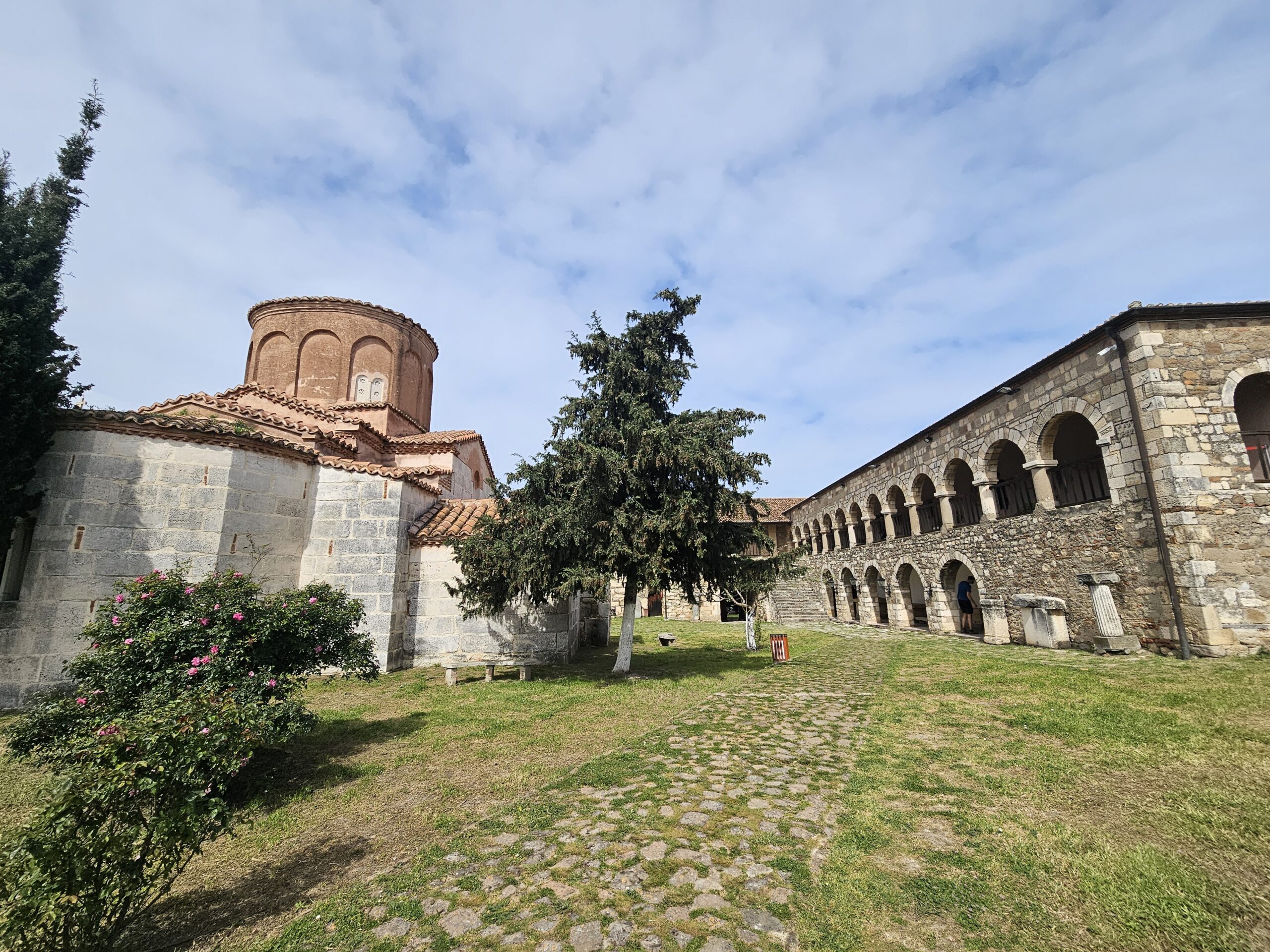
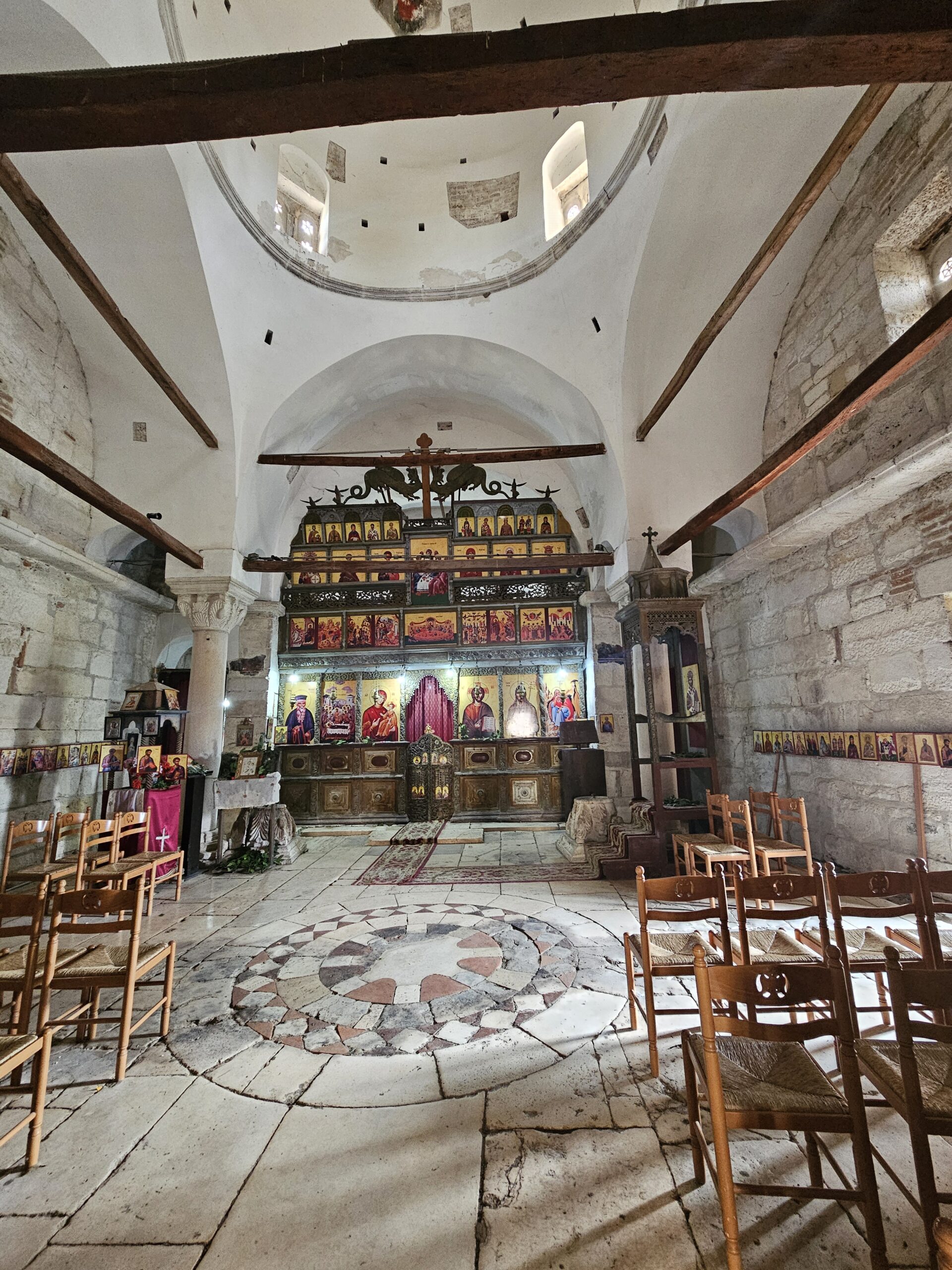
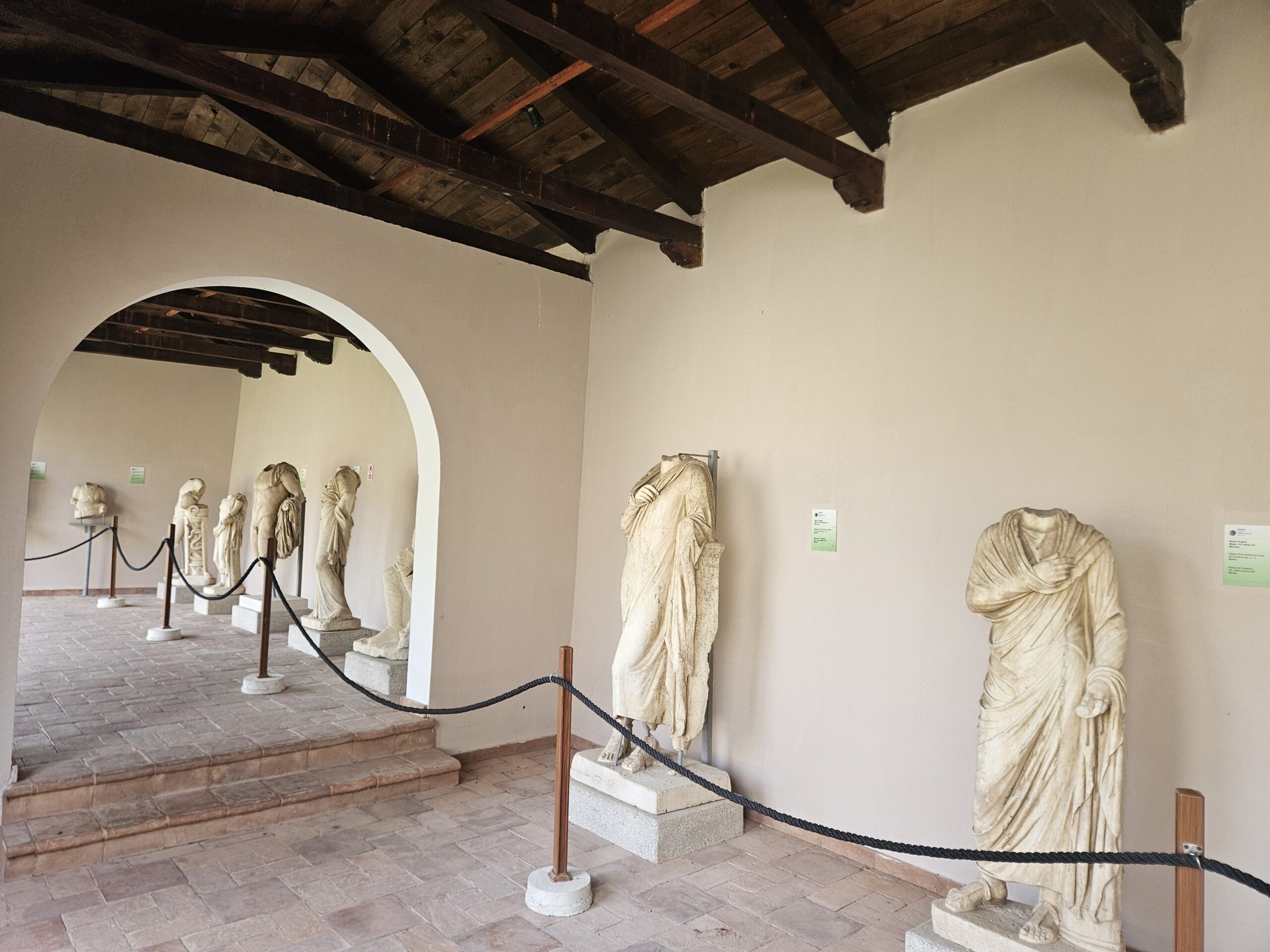
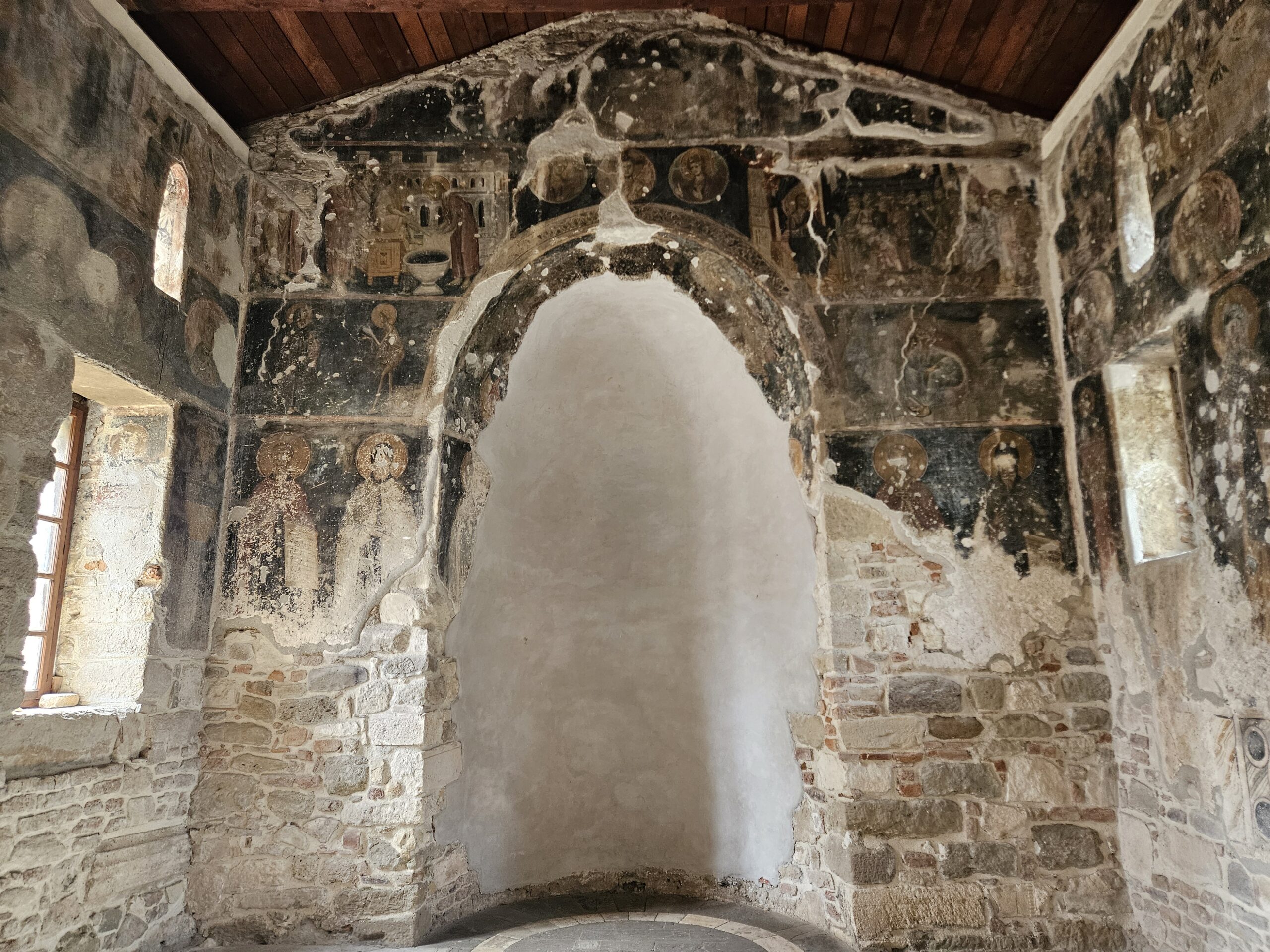
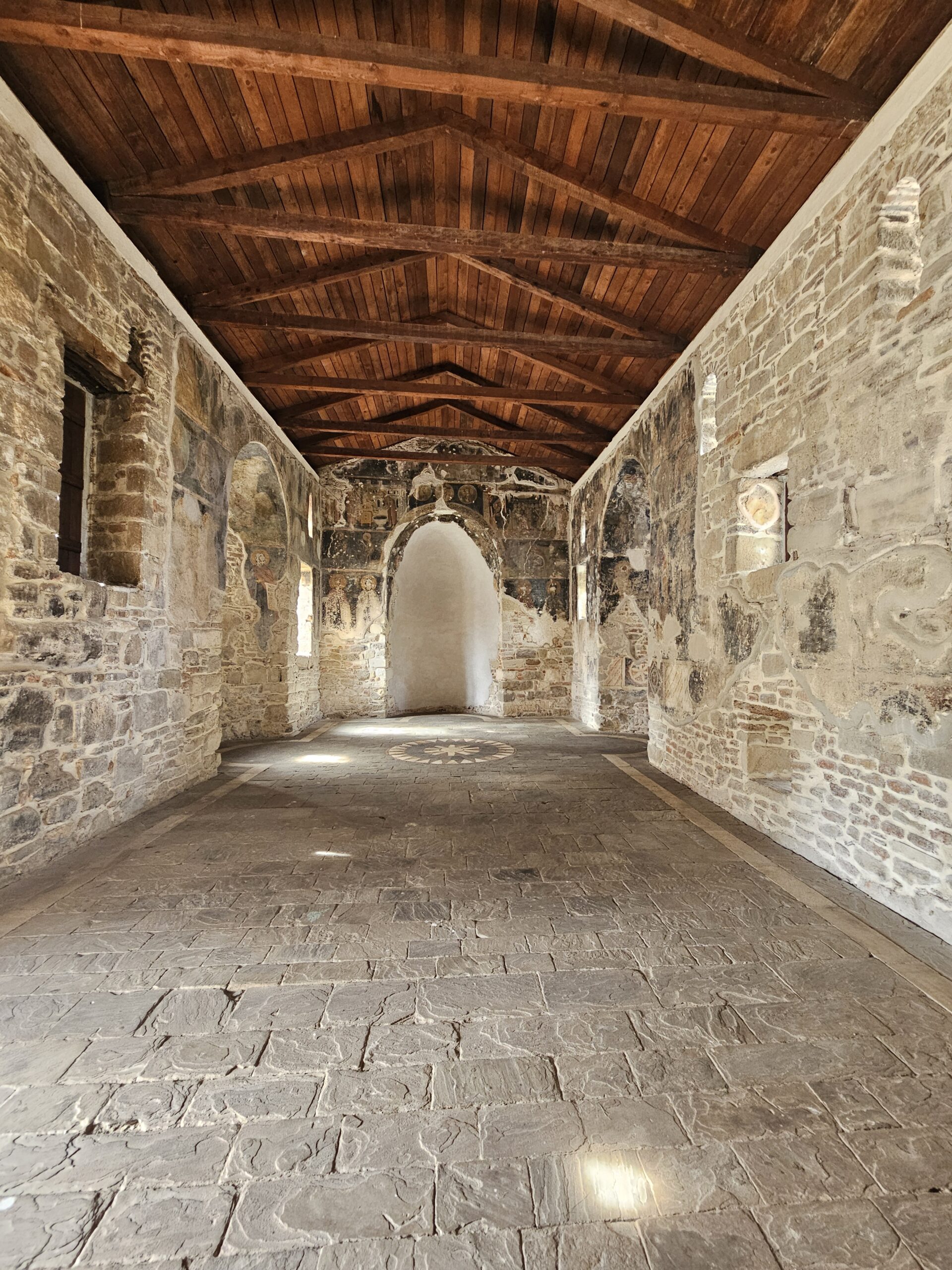
The monastery museum at the entrance shows what the excavations have uncovered: statues, mosaics, coins, ceramics. The monastery itself — built in the 13th century, partly from stone blocks taken from the ancient theater — is its own small wonder. The frescoes in the adjacent 14th-century refectory are among the best-preserved medieval wall paintings in Albania.

UNESCO Status: On the waiting list, not yet there
A detail often missing online: Apollonia is to this day not a UNESCO World Heritage Site — at least not officially. The ancient city of Apollonia is on Albania’s UNESCO Tentative List, meaning it has been nominated but not yet inscribed. Albania is actively pursuing the candidacy. Whether and when the inscription will come is open. Which makes a visit no less worthwhile — on the contrary. You have the site almost to yourself.
Practical information
- Entrance 600 Lek (~€6), cash only. Open daily 9am–5pm (summer until 8pm).
- No public transport, best reached by car or taxi from Fier (~12 km).
- There are two restaurants on site — one at the entrance, one up on the hill with views over the excavation fields. The second is called Restaurant Léon Rey, named after the French archaeologist who worked here between 1924 and 1938.


Berat — The city where mosques and churches stand wall to wall
About 90 minutes’ drive from Apollonia lies Berat. Berat and Gjirokastra were inscribed as UNESCO World Heritage Sites in 2005 and 2008 — as rare examples of Ottoman-era architecture bearing witness to how different religious and cultural communities coexisted over the centuries.
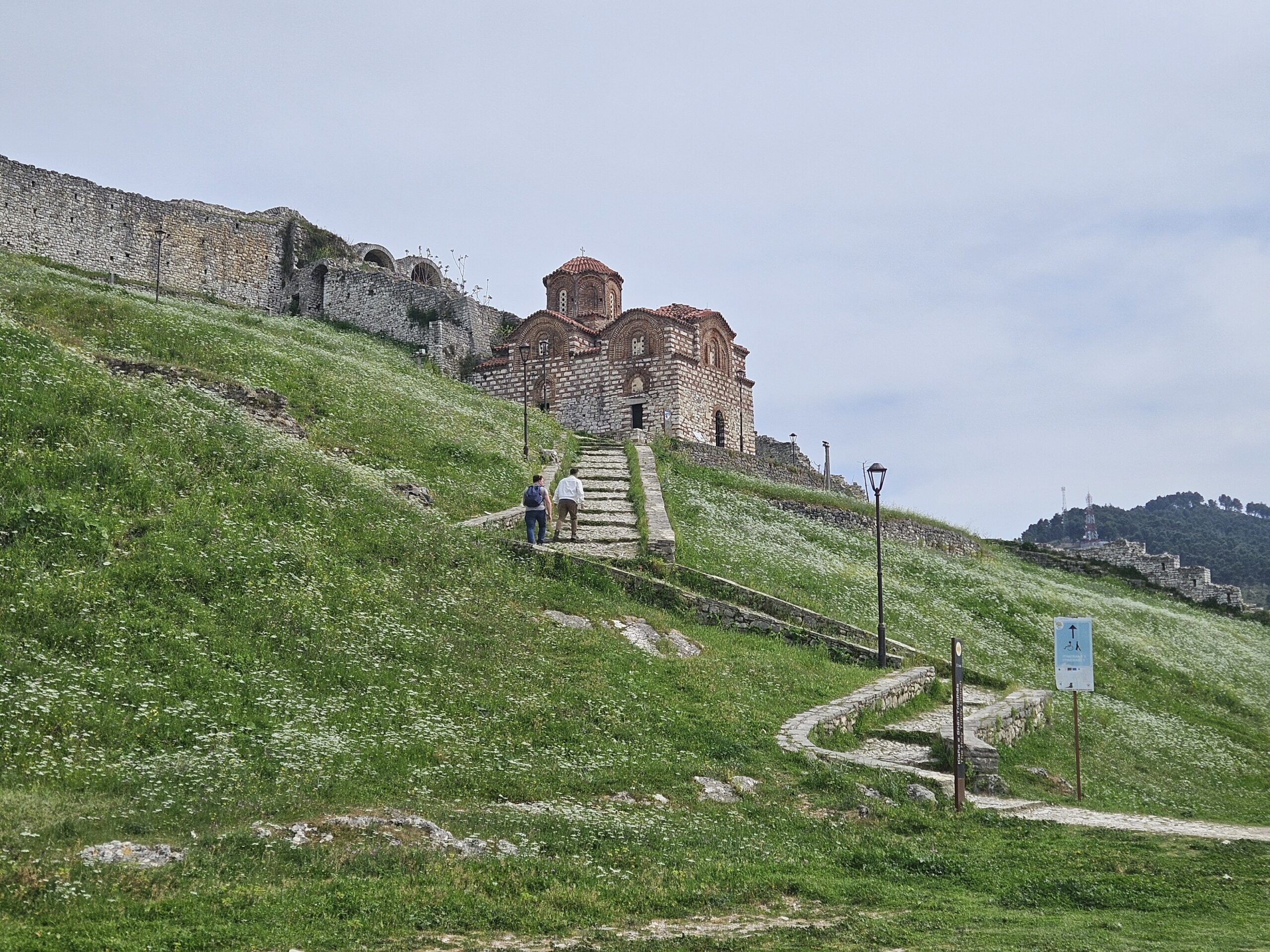
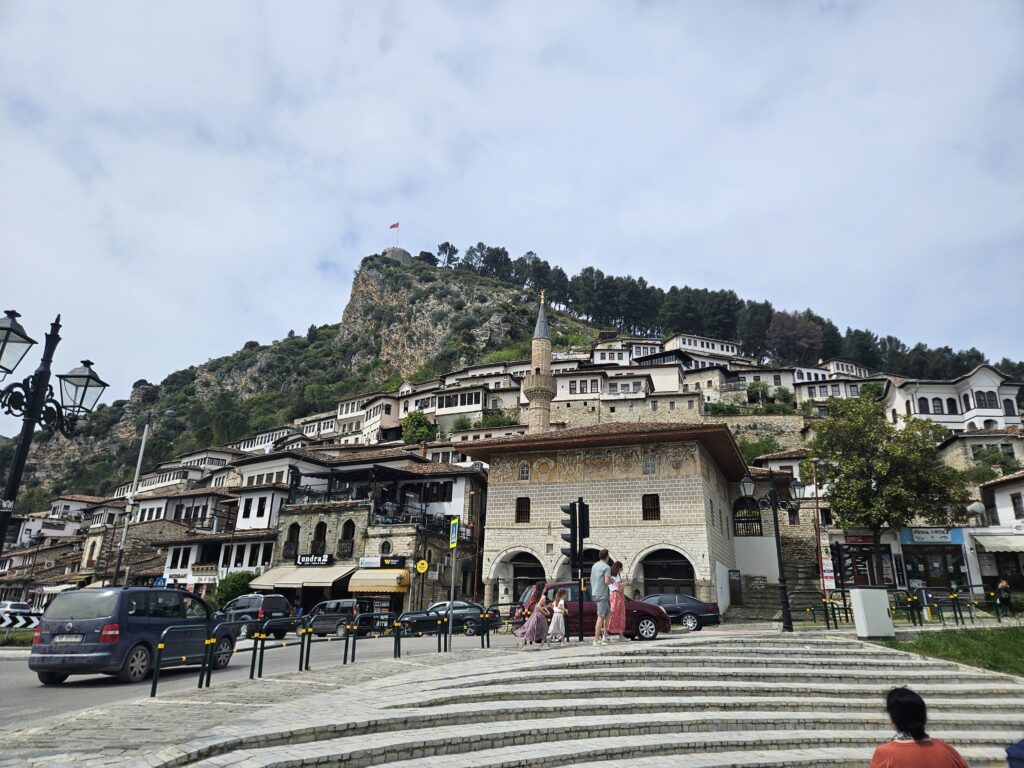
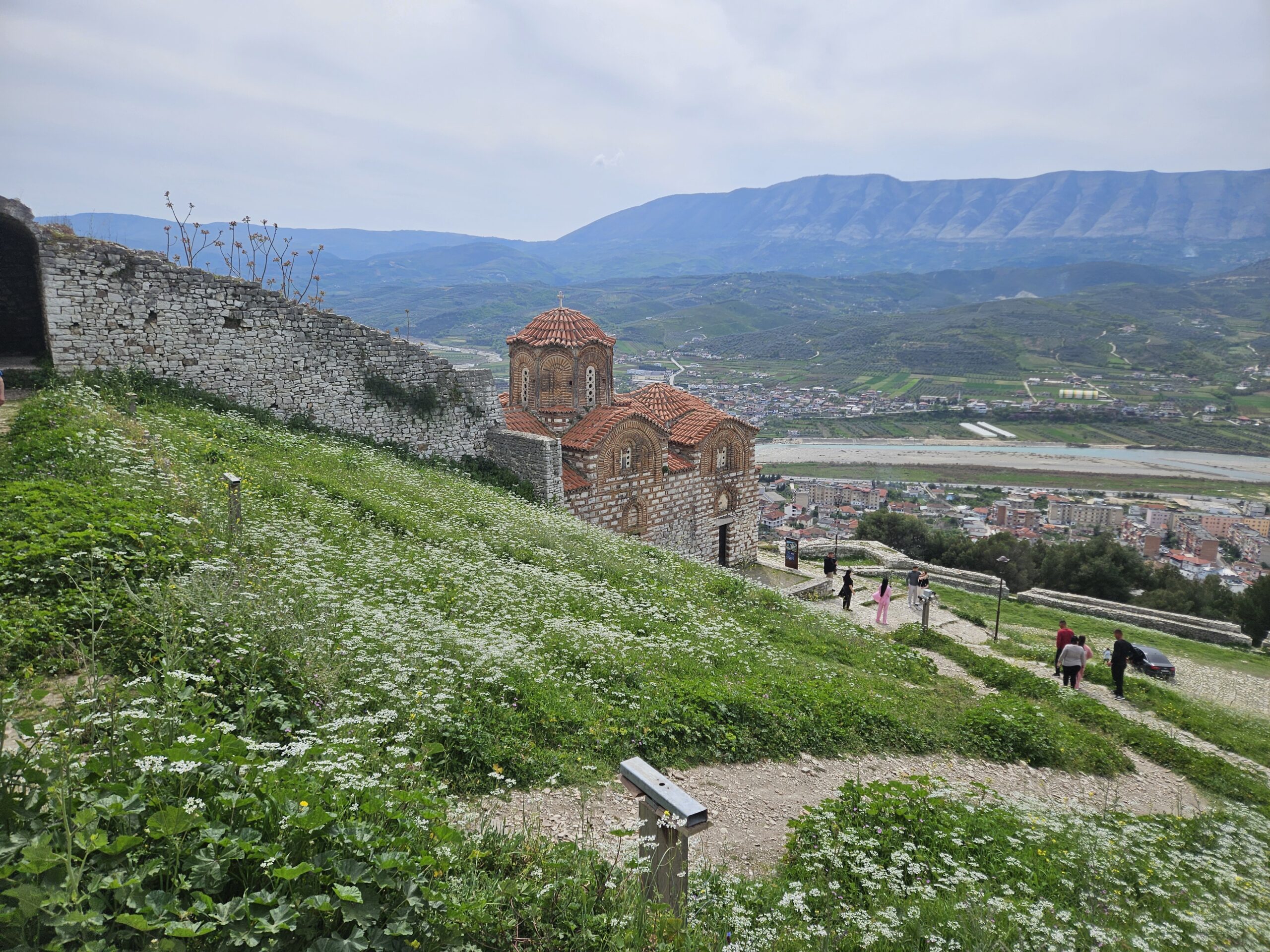
The city has age. Berat traces its origins to an Illyrian settlement in the 4th century BC and has since absorbed Byzantine, Roman, and Ottoman influences. The Ottomans arrived in 1417 — and what they left behind still stands. Mosques next to Byzantine churches, Ottoman houses with their oversized arched windows that explain the name “City of a Thousand Windows.” Berat’s three historic quarters each have their own character: Mangalem on the western bank of the Osum River developed as the Muslim quarter, Gorica on the other side was home to the Christian population, and the Kala — the castle — sits above them both.

The Walking Route
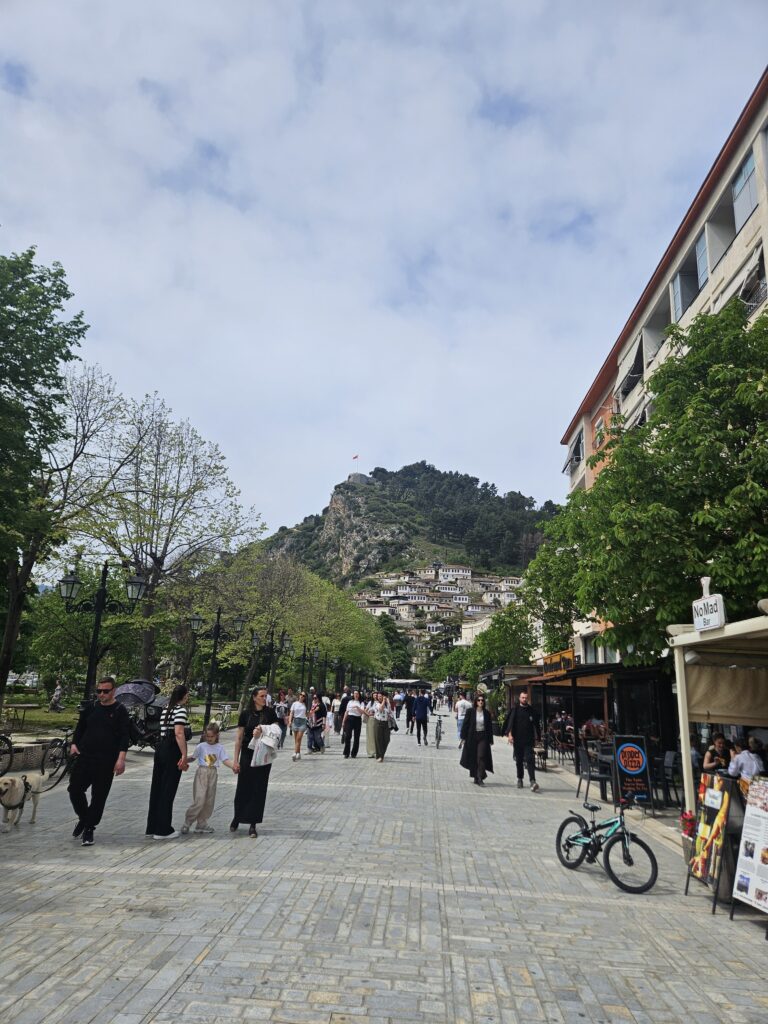
The climb to the castle begins down at the Osum River. Worth knowing before you start — not to put you off, but because you might otherwise rush past what the valley offers: first that quiet view up at the window rows of Mangalem from below, then, step by step, the slow shift in perspective. The climb is tiring. Really tiring. The sun, the cobblestones, the incline that just keeps going.
At the top — and this was one of those moments that justify the whole way up — I ran into an Albanian guide who offered to show me around the castle grounds. Friendly in a way that wasn’t pushy. No script, no price that felt like a transaction. He knew every stone. Explained things I would have walked straight past. And at the end he recommended a small restaurant right there on the castle hill — that turned out to be one of the better tips of the day.
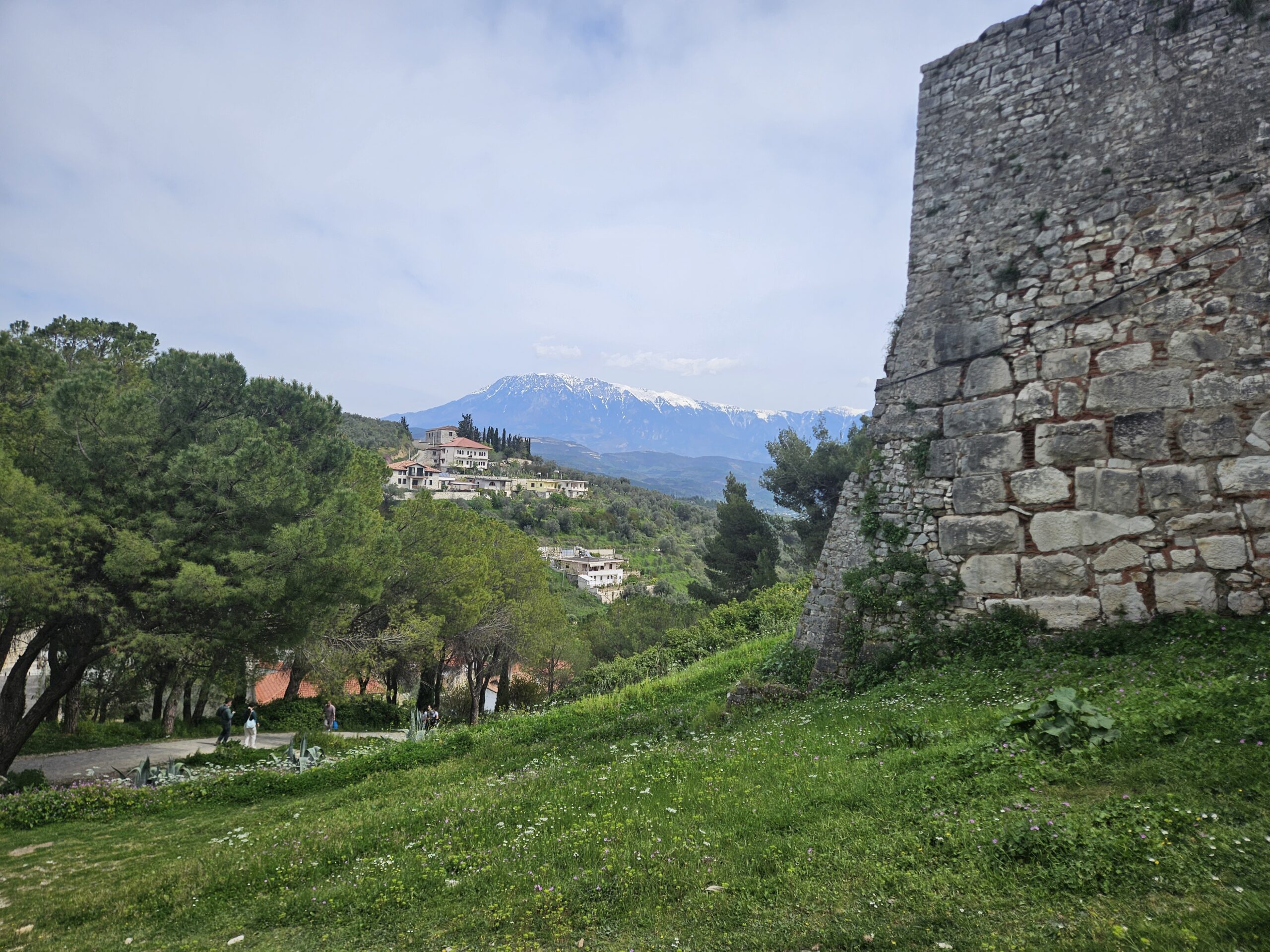
The view from up there is what Berat is known for — and still, reality surprised me. That sight of Mangalem, row upon row of windows, the river below, the red rooftops, the mountains behind: it really does look the way it does in photos. That rarely happens.
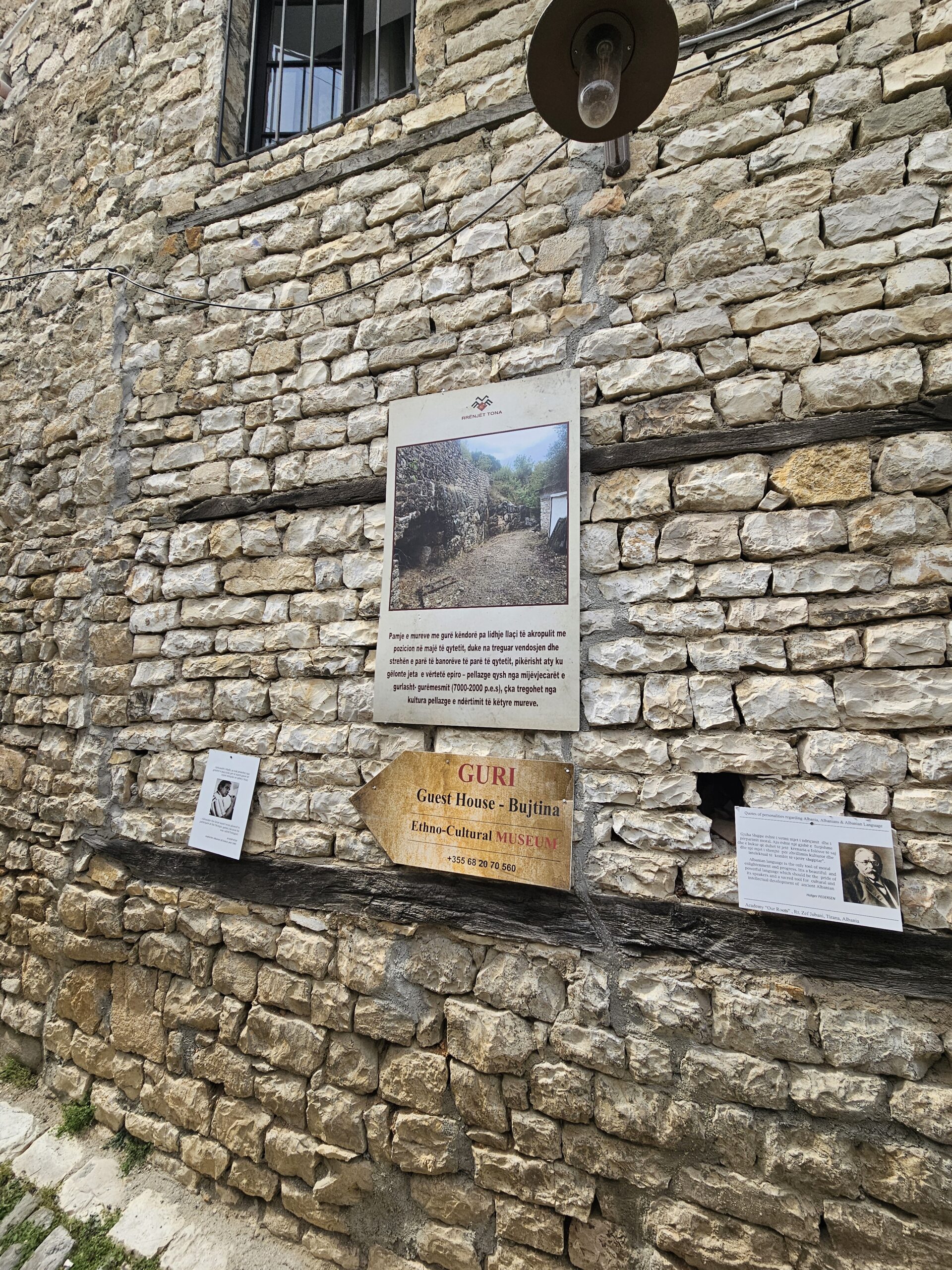
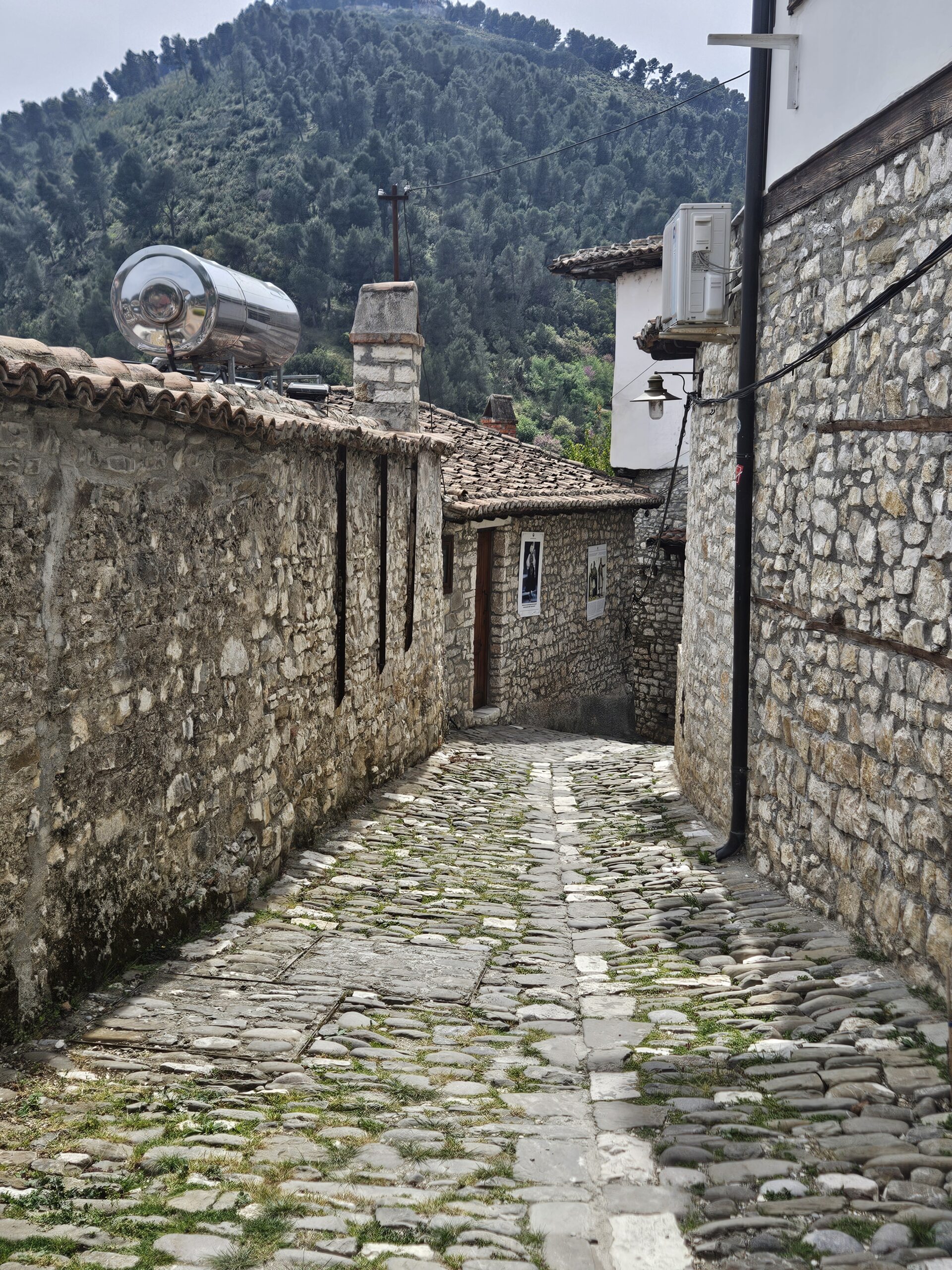
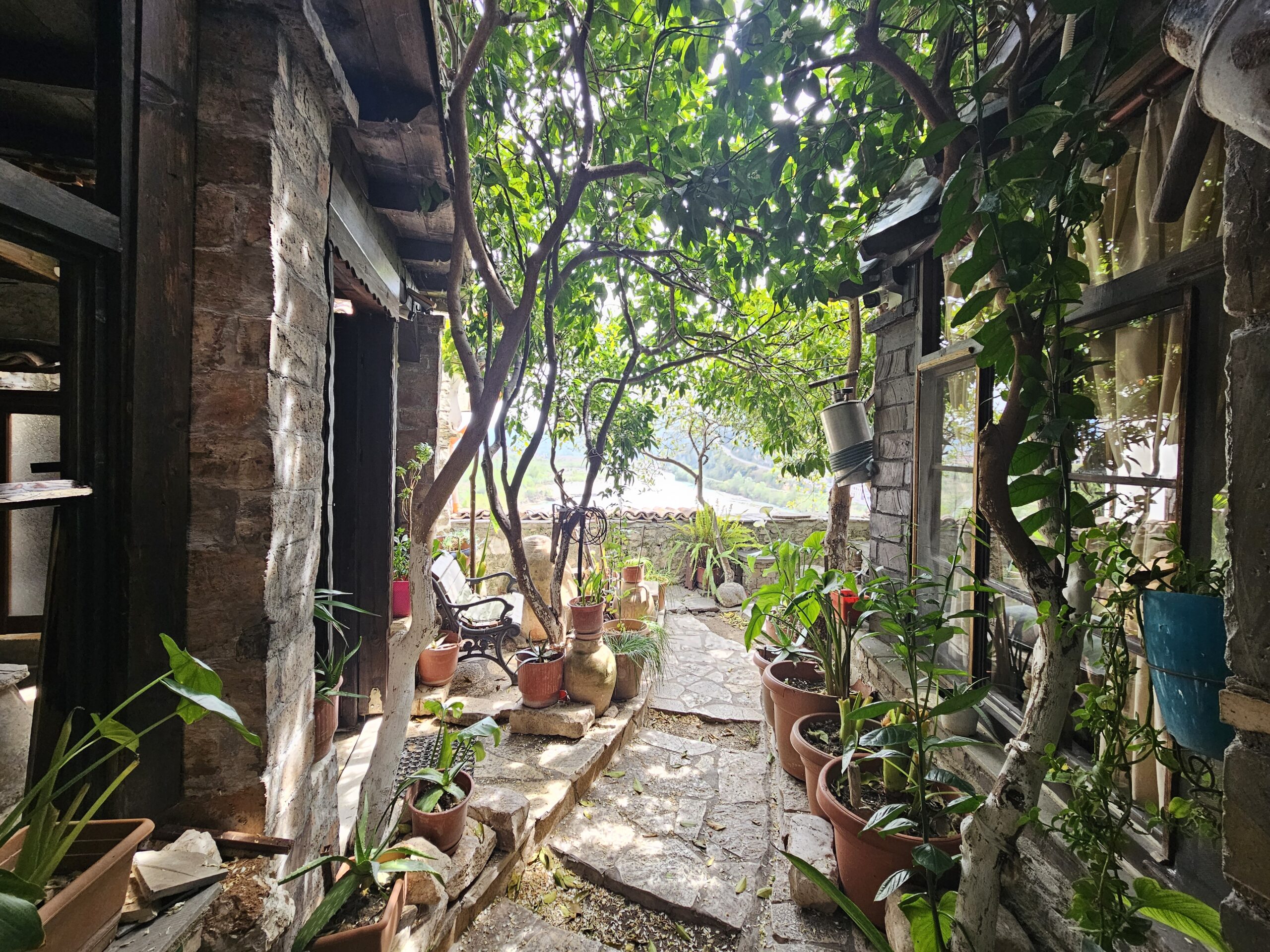
What the photos don’t show are the alleyways in between. You think you’re following a route. Then you turn off because a wall looks interesting, then again because there’s a staircase that seems to lead nowhere — and suddenly you no longer know whether you’re going up or down, whether the next bend leads to a dead end or to a platform with views across the whole valley. This labyrinth of stone houses is half game, half real neighborhood. In between, tiny cafés barely larger than a storage room, restaurants without signs, small guesthouses you only find because someone happened to open the door. This is no staged old-town charm. It’s simply how people live there. And that’s exactly what makes the difference.
Museum and Gorica Bridge
The Onufri Museum inside the castle church of the Dormition of the Virgin holds the 16th-century icons of the Albanian master painter Onufri. He developed his own color palette, particularly his signature “Onufri red,” which shaped Albanian religious art for generations. The museum is small but genuinely extraordinary — and the audio guide is actually worth it here.
Then down to Gorica across the Gorica Bridge. The quarter on the other side of the river is quieter, less touristy, the houses a little more sleepy. The best thing about Gorica: the views back toward Mangalem and the castle.
Codex Beratinus — a detail I don’t want to forget: Berat holds two of the oldest Gospel manuscripts in the world. The Codex Beratinus, with Gospel texts from the 6th and 9th centuries, is part of UNESCO’s Memory of the World Register (inscribed 2005). Berat is therefore not just a living architectural museum but also the keeper of documents that touch on the early history of Christianity.

Food — Where I Went and What Else Works
The Arch · Organic Kitchen
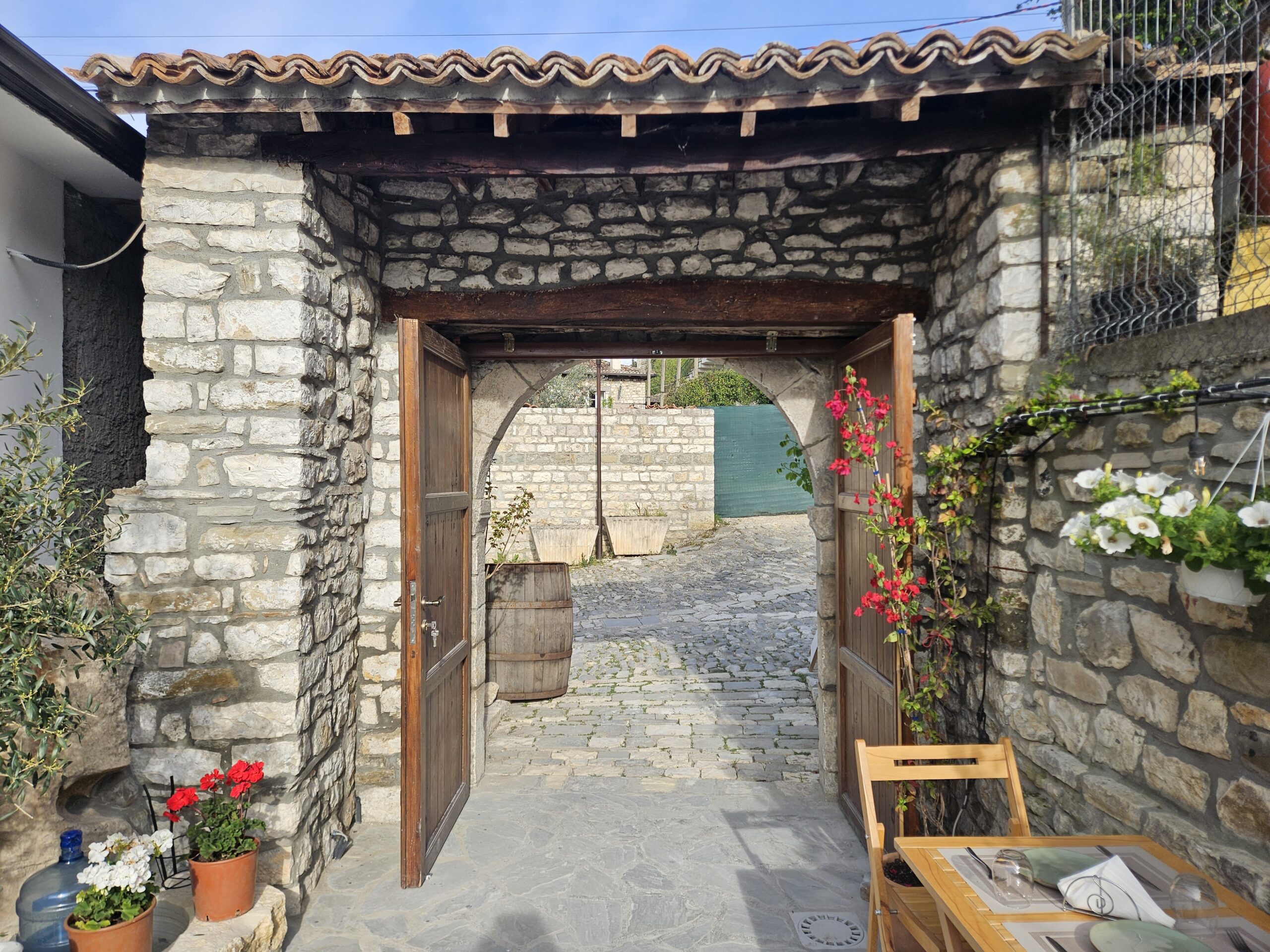
This is where I ate. The restaurant sits in the Gorica quarter, in an old house with a small courtyard. The kitchen is open — you watch the women cooking while you sit. It’s not a staged experience, it just happens.
I had the Fërgesë, a Berat classic made from tomatoes, green peppers, and cottage cheese, slow-cooked, with freshly baked bread. And a raki at the end that they placed in front of me without being asked. Everything from the region, much of it home-grown. Reservation recommended: +355 69 587 7888. Open daily 12pm–10pm.
Homemade Food Lili — for the evening
Lili’s restaurant in the Mangalem quarter is the most recommended in all of Albania. The man doesn’t cook — he hosts evenings. His wife cooks, his father makes the wine, and Lili himself runs around the courtyard greeting everyone by name. Eight items on the menu, everything handmade, prices that are hard to believe. Reservation via WhatsApp, ideally months in advance: +355 69 234 9362.
Temi Albanian Food — in the castle, for lunch
Built right into the castle walls, shaded outdoor seating along the narrow cobblestone lanes. The homemade meatballs and stuffed peppers are very good. House-made olive oil and raki are also available to buy by the bottle.
From June 1st, 2026, Albania will be part of Individual Journey’s itineraries — small groups, local guides, authentic encounters. If you’d like to be notified as soon as the trips are bookable, please feel free to contact me.