Uzbeks love children in a way that catches many Western Europeans off guard. Strangers talk to kids directly, press sweets into their hands, want photos — and none of this is a performance for tourists. It’s just how things are. Once you’ve seen it, you immediately understand why families tend to have an unusually warm experience in Uzbekistan.
But: Uzbekistan is not Mallorca. That’s the point. If you genuinely want to show your children that the world is bigger and more colorful than anything they’ve encountered so far — not as a Sunday afternoon intention, but as a real act — this country is one of the most convincing places to do it.
Is This Actually a Good Fit for Kids?
Yes — with one honest caveat. Uzbekistan is not a theme park. There are no smiley-face kids’ menus, no hotel waterslides, and no English-language animation program in the evenings. What there is: real cities with real history, people with real hospitality, and impressions that stick.
From around age 6–8, the trip starts to make sense — provided children have some patience and some curiosity about their surroundings. From age 10, it gets easier still: impressions land more deeply, conversations with locals become possible, and kids can process a lot on their own. Under 6 is doable, but honestly it tends to be more for the parents than for the children.
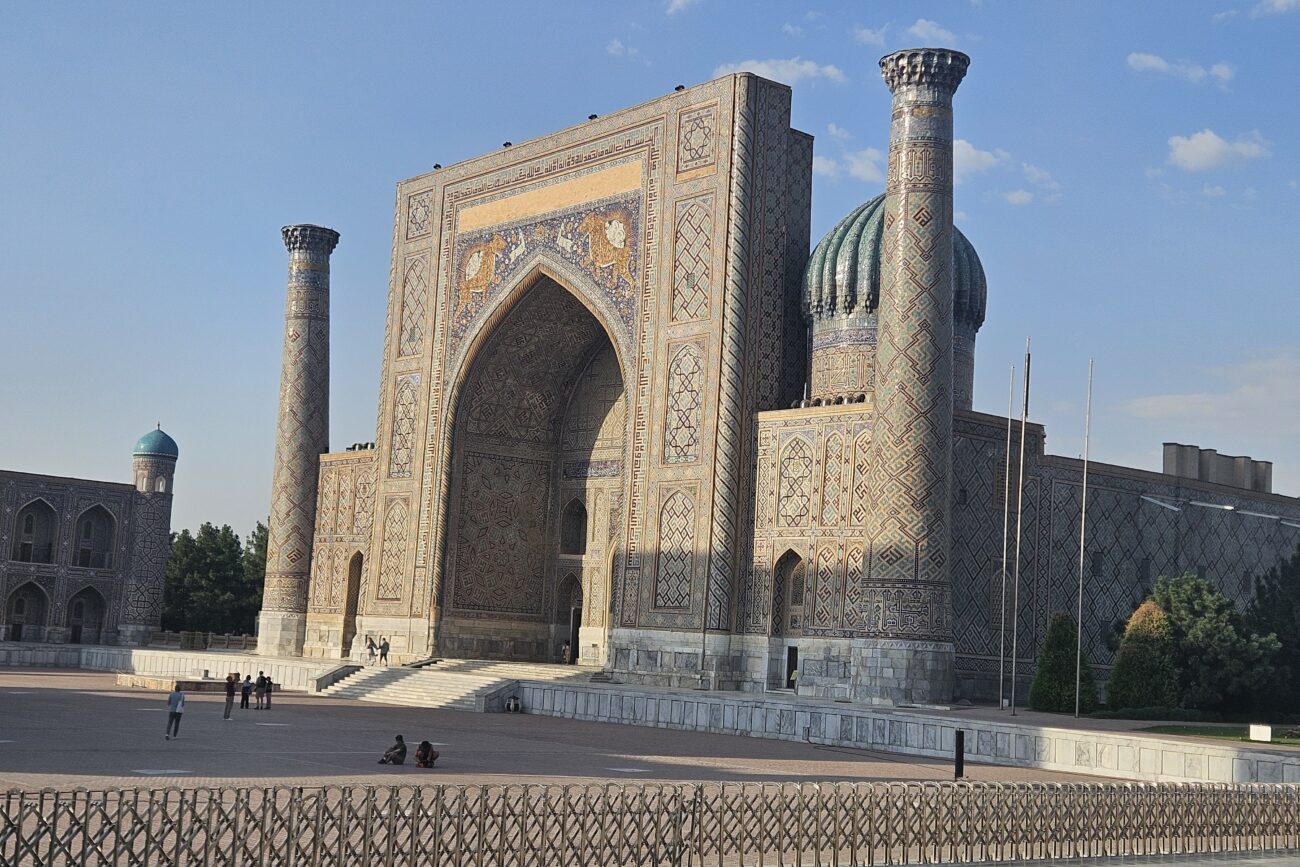
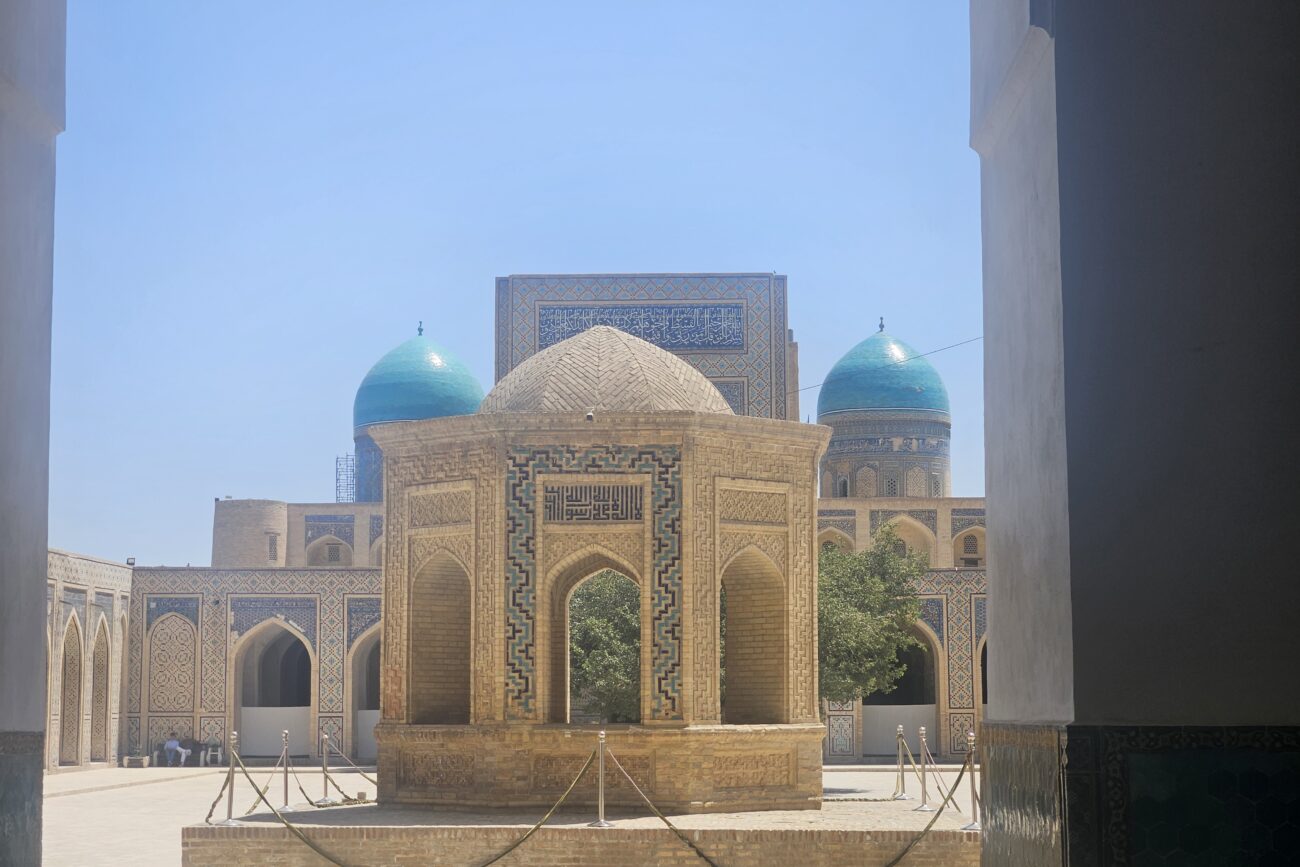
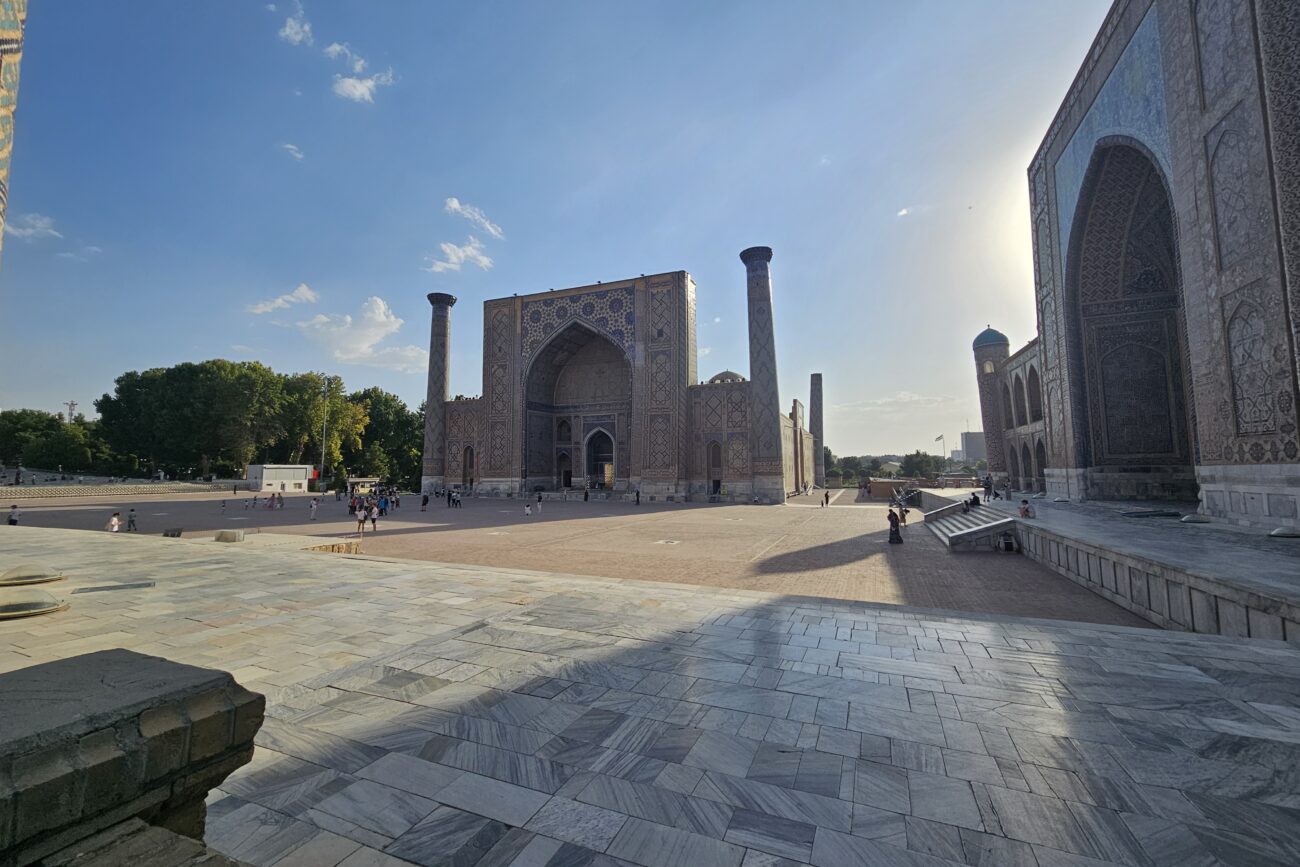
What children take away: the visual force of Uzbek architecture often hits kids more immediately than adults. The Registan in Samarkand, the blue domes, the caravanserai arches — these aren’t abstract heritage sites, they’re backdrops from a fairy tale they’ve never read. And then there’s the Afrosiyob high-speed train, which I’ll get to shortly.


What Thrills Kids in Uzbekistan — and What Surprises Parents
The Afrosiyob High-Speed Train
Tashkent to Samarkand in under two hours, modern carriages, departure boards in Arabic, Russian and Uzbek — kids are immediately captivated. The train is an experience in its own right, not just transport. On our family trips, it regularly comes up when you ask children afterwards what they liked most.
Khiva — The Fairy-Tale City
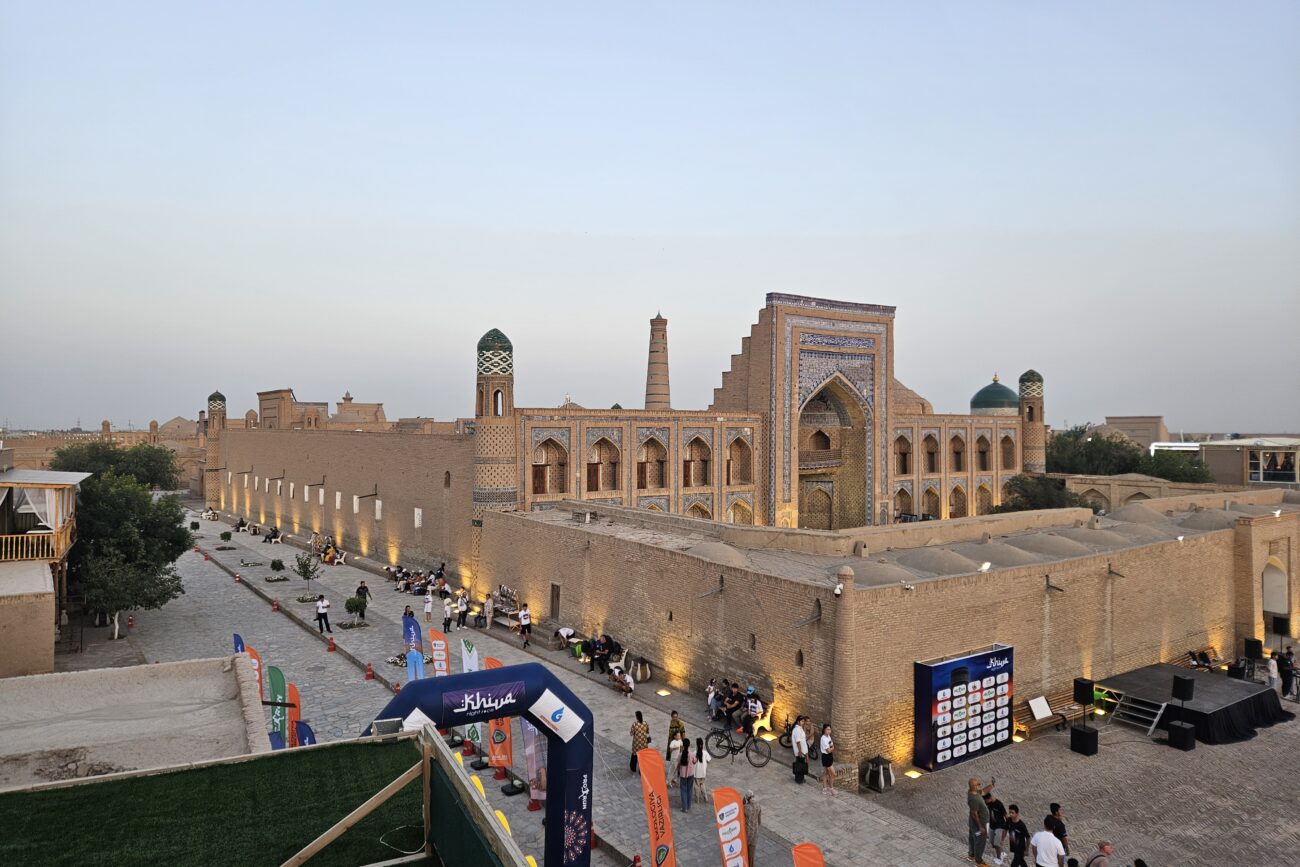
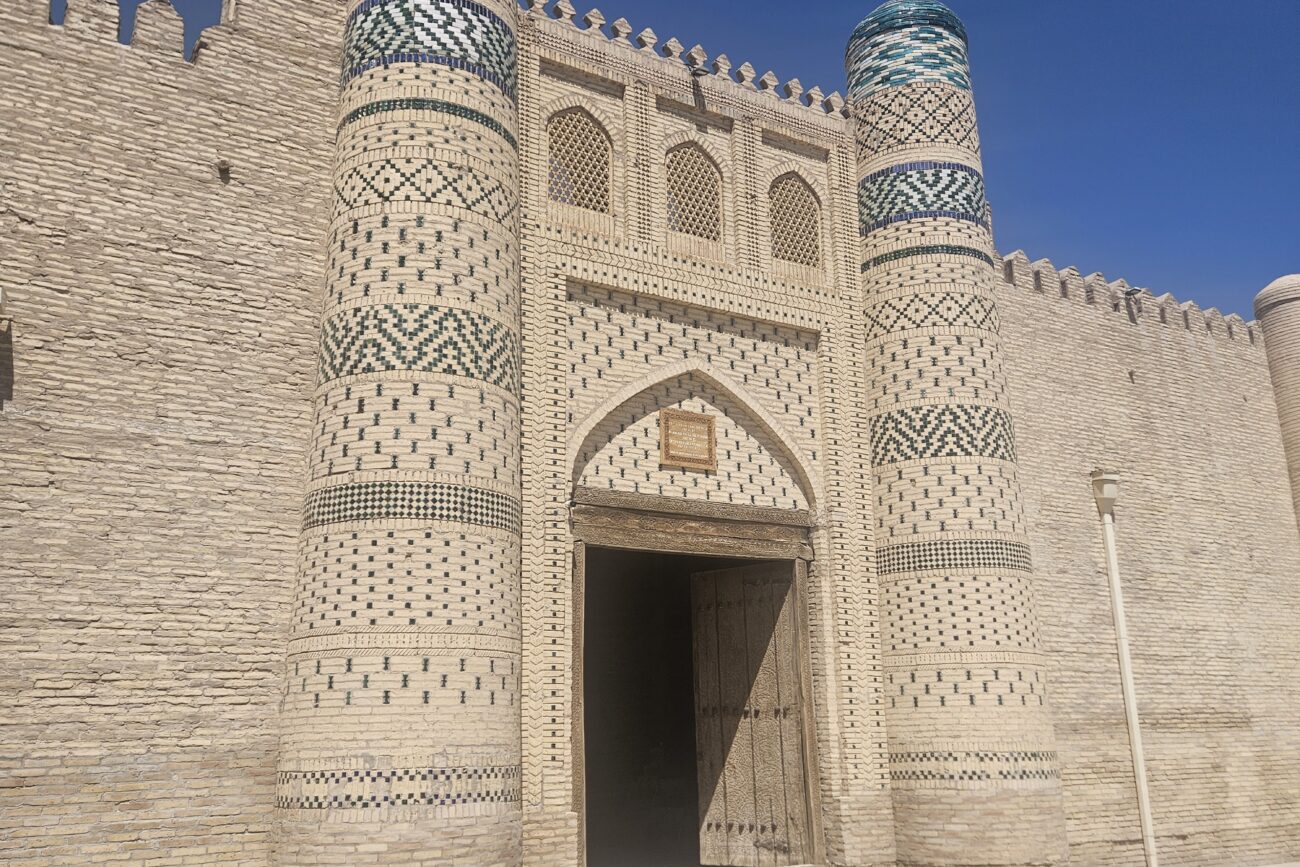
The walled old city of Itchan Kala in Khiva is a UNESCO World Heritage Site — and one of those rare places that makes immediate sense to children, without any explanation needed. No cars, no noise, mud walls, minarets, merchants selling carpets and spices. For kids it’s a different world entirely. For adults too, but children have the advantage of not yet being too jaded to notice.
The Bazaars
No museum in the world makes a stronger impression than an Uzbek bazaar. Colors, smells, sounds — sensory overload that no screen can replicate. Add to that the sweets children get offered everywhere: nuts, dried fruit, halva. Most kids are completely wired after twenty minutes at a bazaar — in the best sense.
Chimgan & Charvak Lake
The Chimgan mountain resort and the turquoise Charvak Lake sit about an hour from Tashkent. Water, mountains, fresh air — a natural counterpoint to the intensity of the city days. Kids can swim and explore, and parents finally get a moment to breathe. We build this day into every family itinerary because it changes the pace of the trip.
The People
This doesn’t appear on any sightseeing list, but it may be the most important thing: children are seen in Uzbekistan. Not as appendages of their parents, but as people in their own right who deserve attention, interest and warmth. Many families tell me afterwards that this was what made the trip — not the architecture, but the encounters.


Two Ways to Experience Uzbekistan with Kids
I offer two formats — depending on available time, preferred pace, and the age of the children:
Uzbekistan for Families — 10 Days
The compact format covers the key stops: Tashkent, the Afrosiyob train, Samarkand, Bukhara and Khiva, plus the Chimgan day as a deliberate rest point. The pace is family-appropriate — no marathon sightseeing, breaks are built in. Suited for children from around age 8 who are experiencing this kind of trip for the first time.
Uzbekistan for Families — 14 Days
The longer format offers more room — more time at each place, less rushing, additional excursions. Recommended for families who prefer going deeper over ticking off more sights. Also better suited for younger children who need more buffer.
Both trips run as small groups of up to 14 people. Local guides accompany the entire tour — for families, this isn’t a luxury, it’s the most sensible choice: someone who speaks the language, can adjust the pace, tells children stories, and knows which restaurant is actually open today.
Best Time to Travel with Kids
April to early June and September to October. Temperatures are pleasant, days are long, and the main sights aren’t overcrowded.
July and August are not recommended for families with children. Bukhara and Khiva regularly hit 40–45°C in high summer. That’s taxing for adults; for kids it’s barely manageable.
Winter (December to February) is possible but cold and logistically more demanding. Most families are better placed in other regions during that period.
Entry & Formalities
Visa
Citizens of Germany, Austria and Switzerland can apply for an e-visa online — straightforward, inexpensive (around USD 20), processing time approximately 3 working days. The visa is valid for 30 days and allows a single entry. Children require their own visa; a child entry in a parent’s passport is not accepted.
Travel Documents for Children
Every child needs their own passport — an ID card is not sufficient. If you’re travelling with a child and only one parent is present, it’s worth carrying an informal written consent from the other parent. Not always mandatory, but it avoids lengthy conversations at the border.
Vaccinations & Health
No vaccinations are required for entry. Standard protection (tetanus, diphtheria, hepatitis A) is sensible. The same applies to children as to adults — a consultation with a travel medicine specialist before departure is recommended, though this article is no substitute for that.
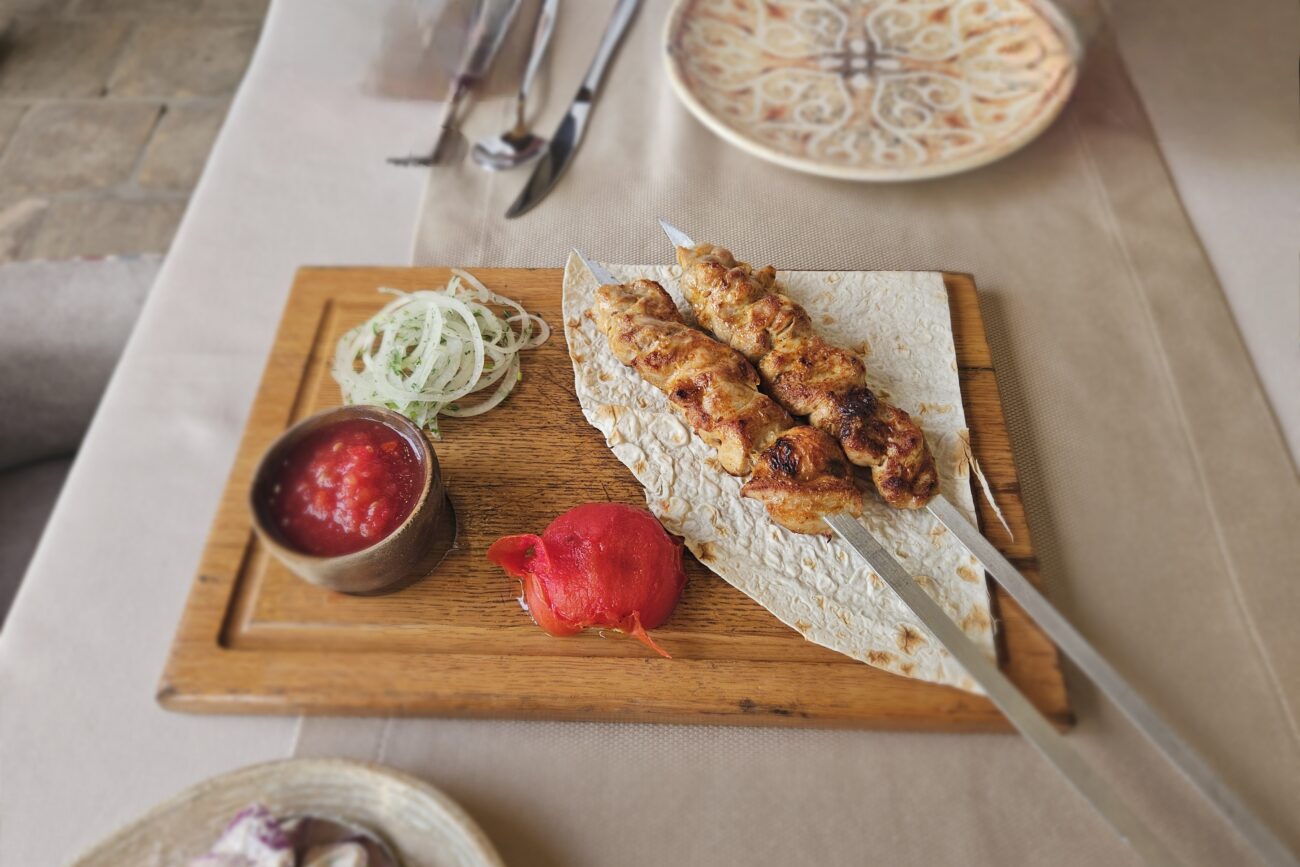
Don’t drink tap water. Bottled water is widely available and cheap. Uzbek food is generally well-tolerated by children — plenty of bread, rice, meat and vegetables, minimal spice. Anyone with nut allergies should stay alert: nuts are present throughout Uzbek cuisine.
Currency & Money
The local currency is the Uzbek Som (UZS). Exchange rate early 2025: approx. 1 EUR = 13,500 UZS. Euros and US dollars can be exchanged easily at ATMs and exchange offices. Credit cards are increasingly accepted in hotels and larger restaurants, but cash remains the standard — especially at markets and smaller shops.
By European standards, Uzbekistan is affordable. A family lunch at a decent restaurant rarely costs more than €20–25. That takes meaningful pressure off the travel budget, even if the flights have their price.
Getting There
Direct flights to Tashkent operate from Frankfurt and Vienna with Uzbekistan Airways, flight time approximately 6–7 hours. No time zone disaster — Uzbekistan is UTC+5, which is 3 or 4 hours ahead of Central Europe. Children tend to adjust quickly.
Insurance
International travel health insurance including repatriation coverage is essential for all travellers — and especially for families with children. Uzbekistan has a functioning healthcare system in the cities, but medical care to Western standards is not reliably available in rural areas.
In the End
Uzbekistan is not an easy trip — and that is its greatest value. Children who’ve been there have seen something that doesn’t sit on every school desk. Blue domes older than Europe as a political idea. People who don’t treat hospitality as a service, but as a matter of course. A train that moves through the steppe and seems to arrive somewhere in the 14th century.
Anyone who wants to show their family that — you’re very welcome to join.
Our family travel programmes: Uzbekistan for Families with Children