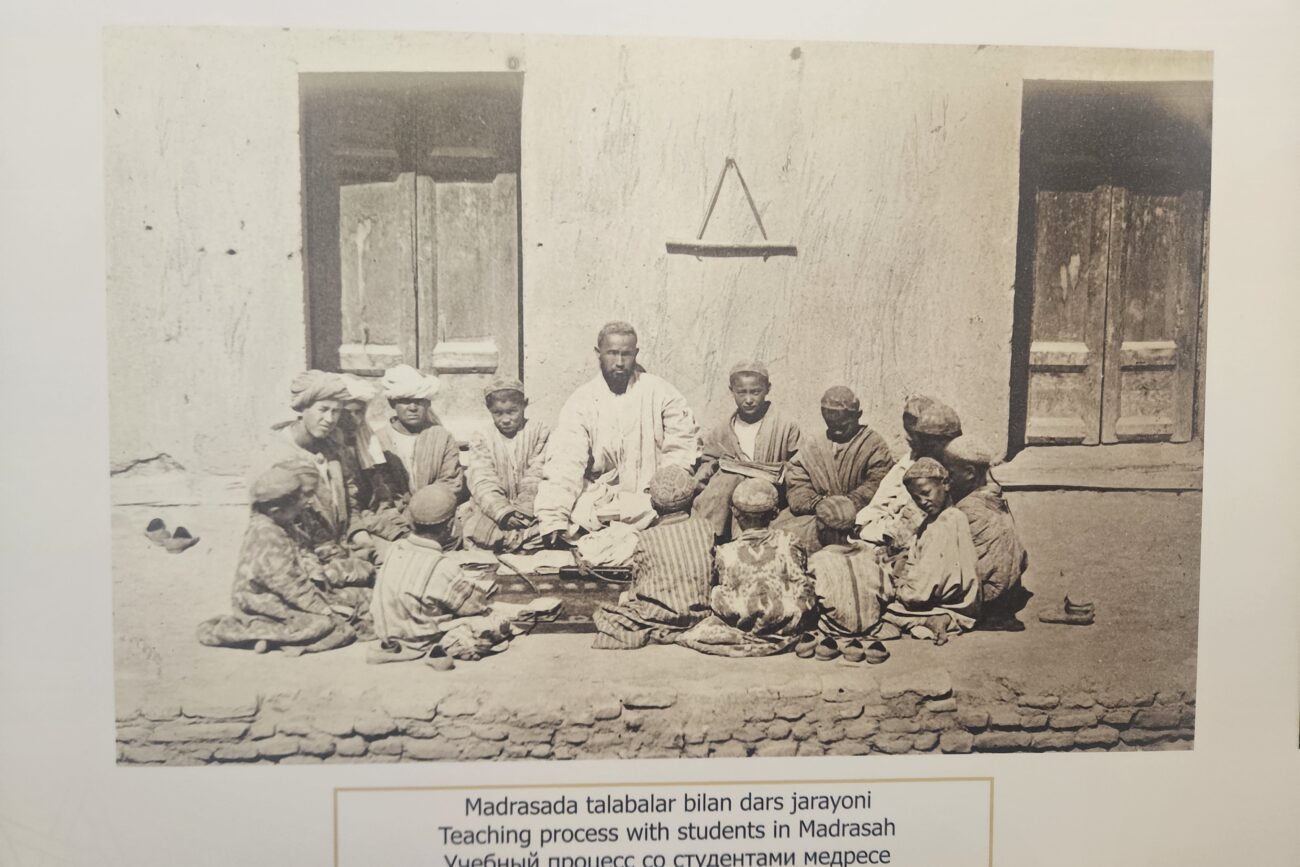
Most countries you visit leave behind a feeling. Uzbekistan leaves behind questions. Not because the country is hard to understand, but because it goes deeper than expected — and you realise you’re not done with it when the return flight takes off.
The country sits at the heart of Central Asia, was one of the most important stops on the Silk Road for centuries, and carries that history not as a museum piece but as living substance. Samarkand, Bukhara, Khiva — these names carry a weight that only becomes clear when you’re standing in front of them.
If you think of travel as a complete break from everything, this might not be your place. If you travel because countries, people and stories interest you, it probably is.
The Most Important Cities
Tashkent
Most people treat the capital as a transit stop. That’s a shame. Tashkent is a real city — modern, loud, shot through with Soviet monumental architecture. The Chorsu Bazaar is one of the largest in all of Central Asia. The metro lines from the 1970s are worth a visit on their own: each station a different Soviet mural, the mosaic artist apparently given free rein. Spending a night here instead of flying straight onwards gives the rest of the country more context.
Samarkand
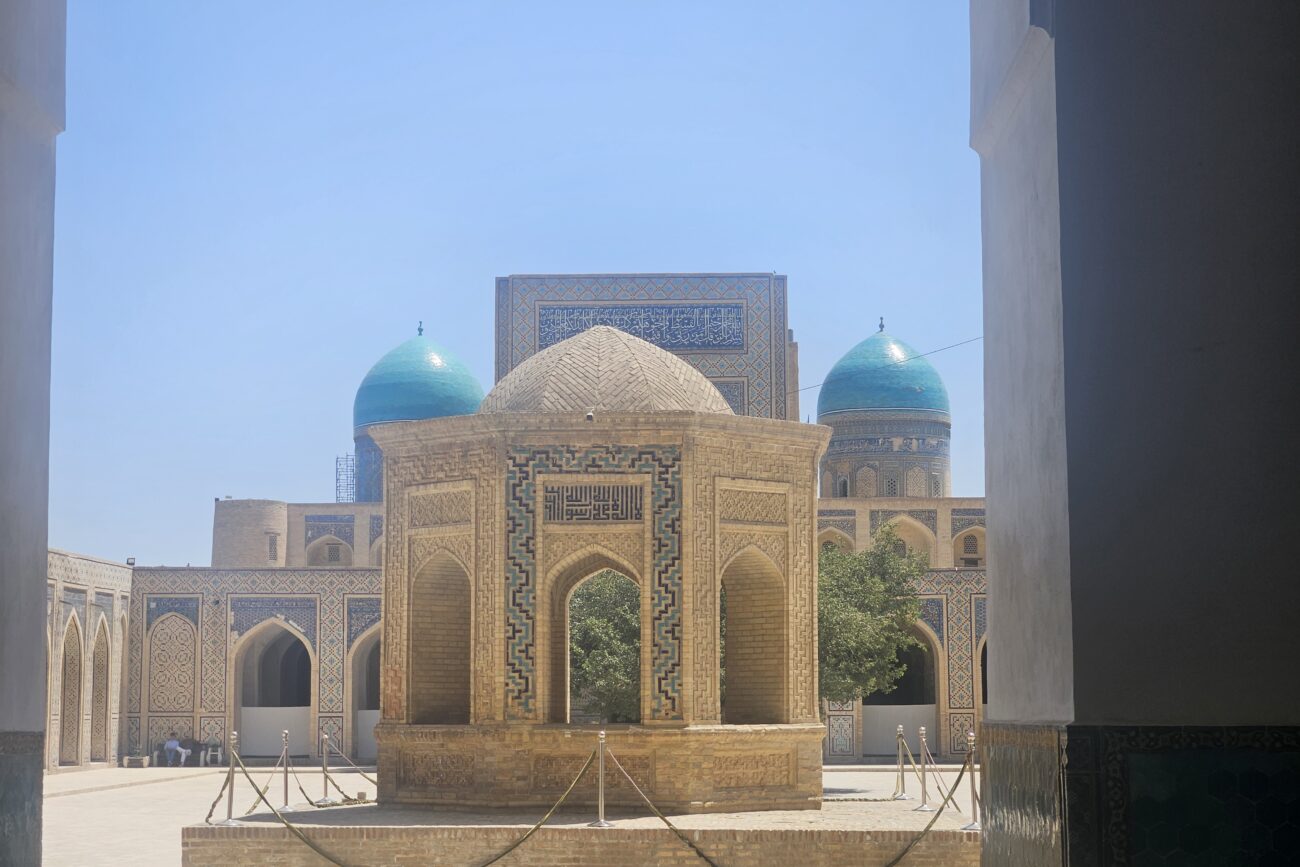
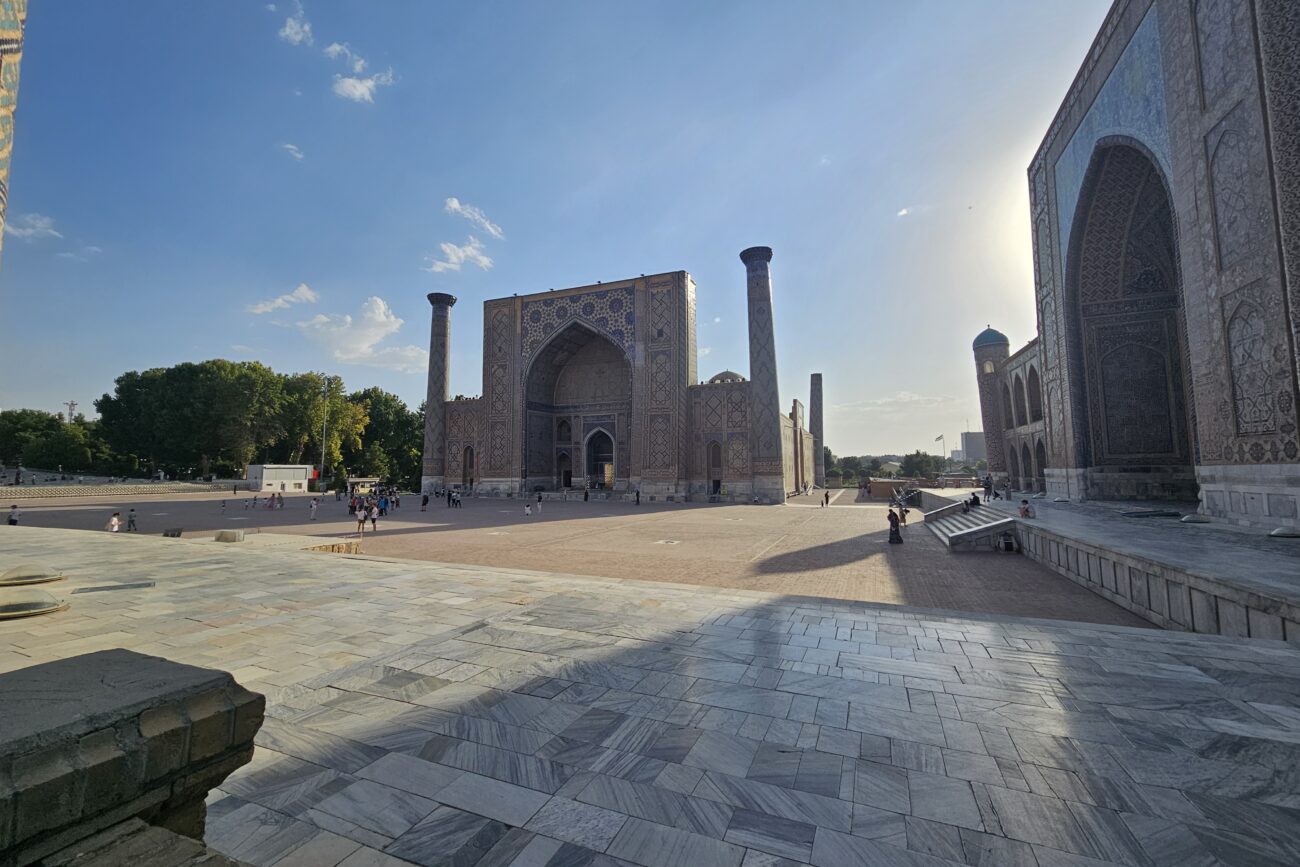
The Registan. You’ve seen photos, you’ve read descriptions. You still won’t be prepared. Three madrasas from the 15th and 17th centuries around a single square, tiles in blue and gold, proportions that deliberately exceed the human scale. The architect wanted you to feel small. It works. Then there’s the Gur-e-Amir mausoleum and the Shakhi-Zinda necropolis with eleven mausoleums in a row — a tiled street that descends and somehow keeps going.
Bukhara
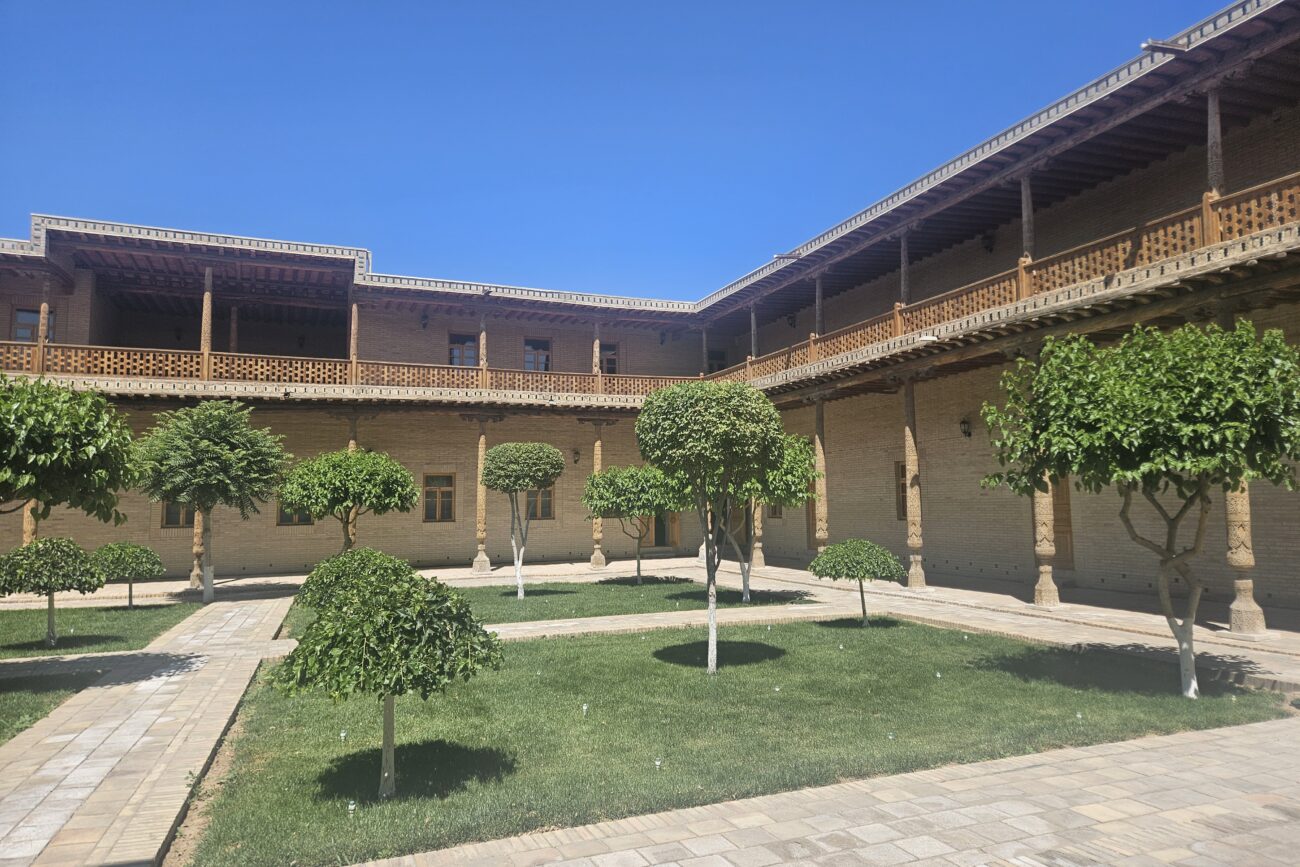
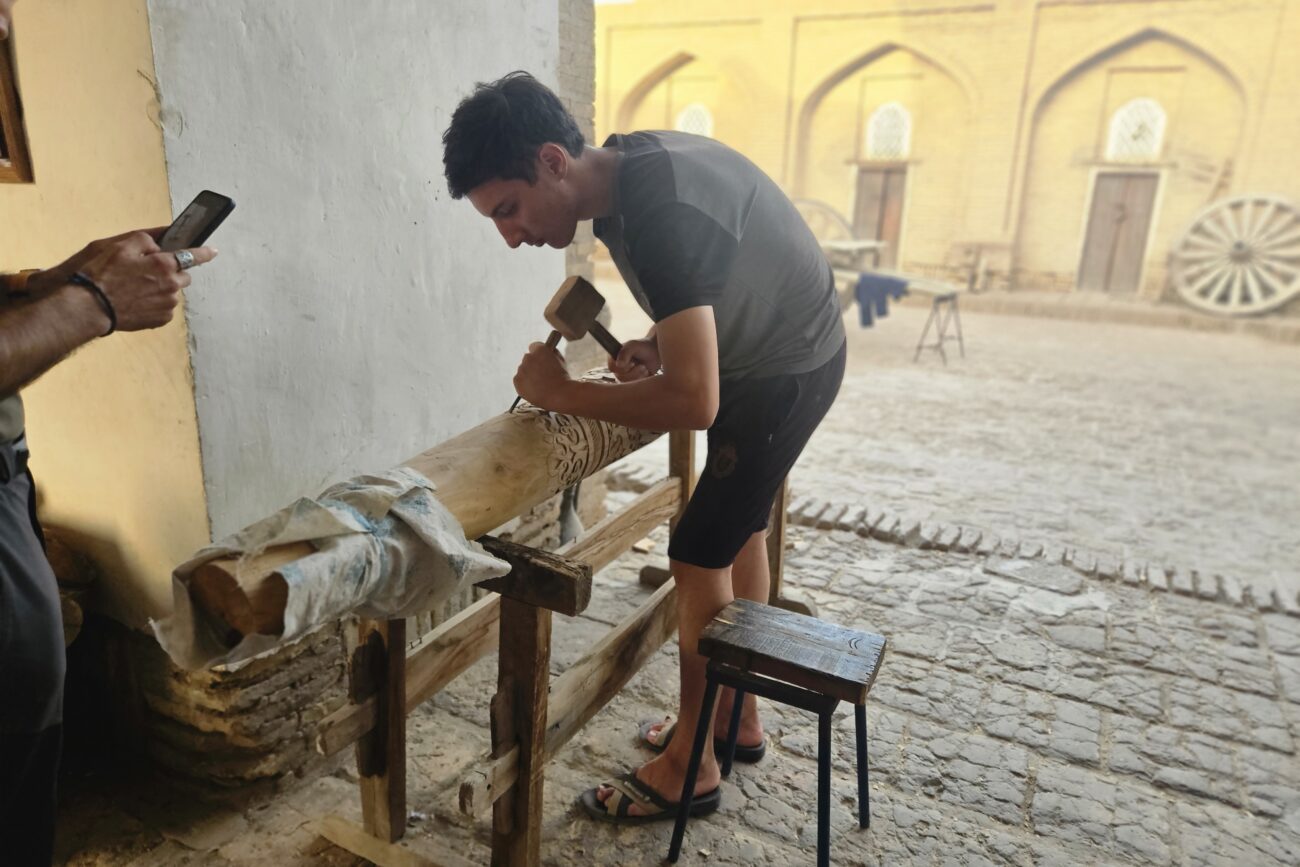
Bukhara is livelier than Samarkand. The old city isn’t a backdrop — people live there. Craftsmen still sit in the old caravanserais, carpets are being knotted, miniature painting taught. An evening at the Lyabi-Hauz pool, under old mulberry trees, with a tea: that’s one of those evenings you didn’t plan and that stays with you anyway.
Khiva (Xiva)
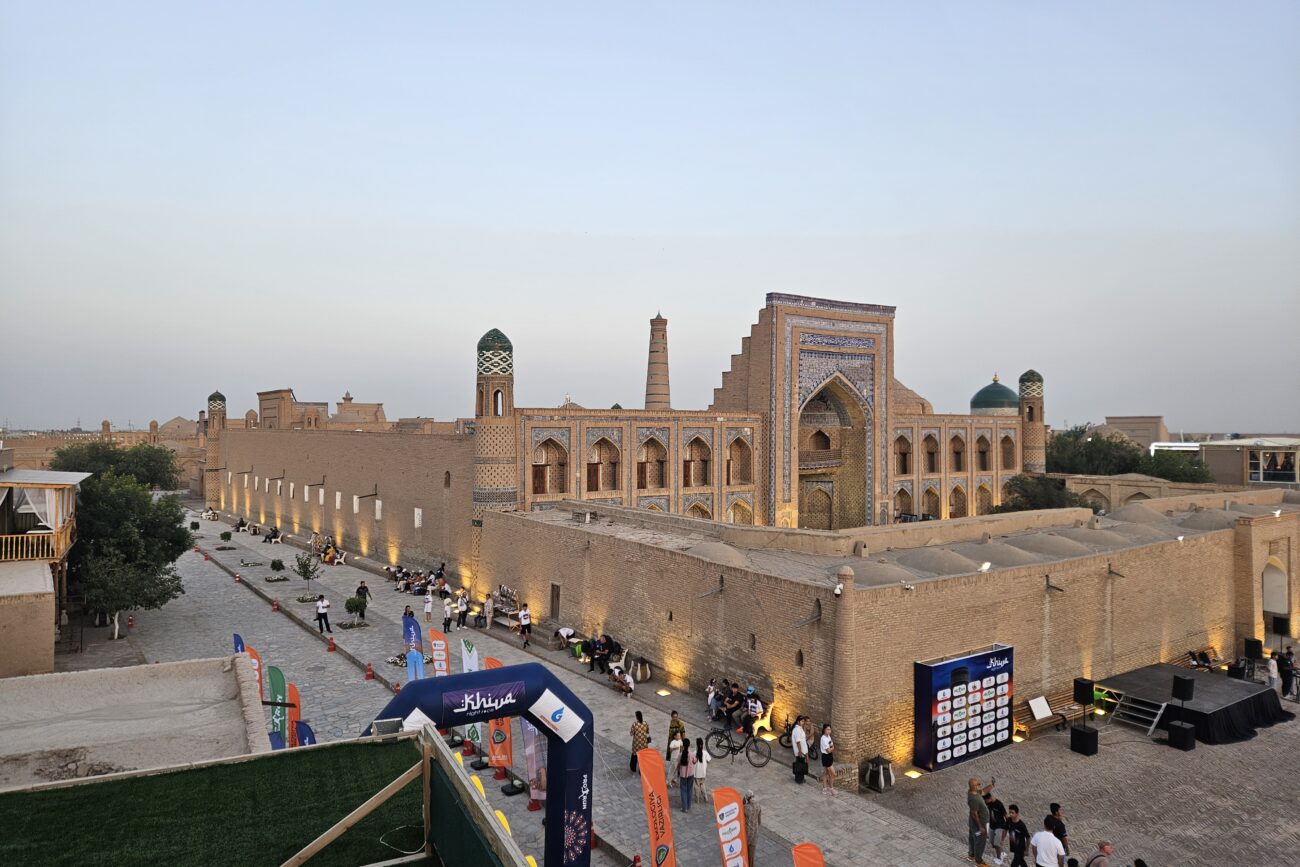
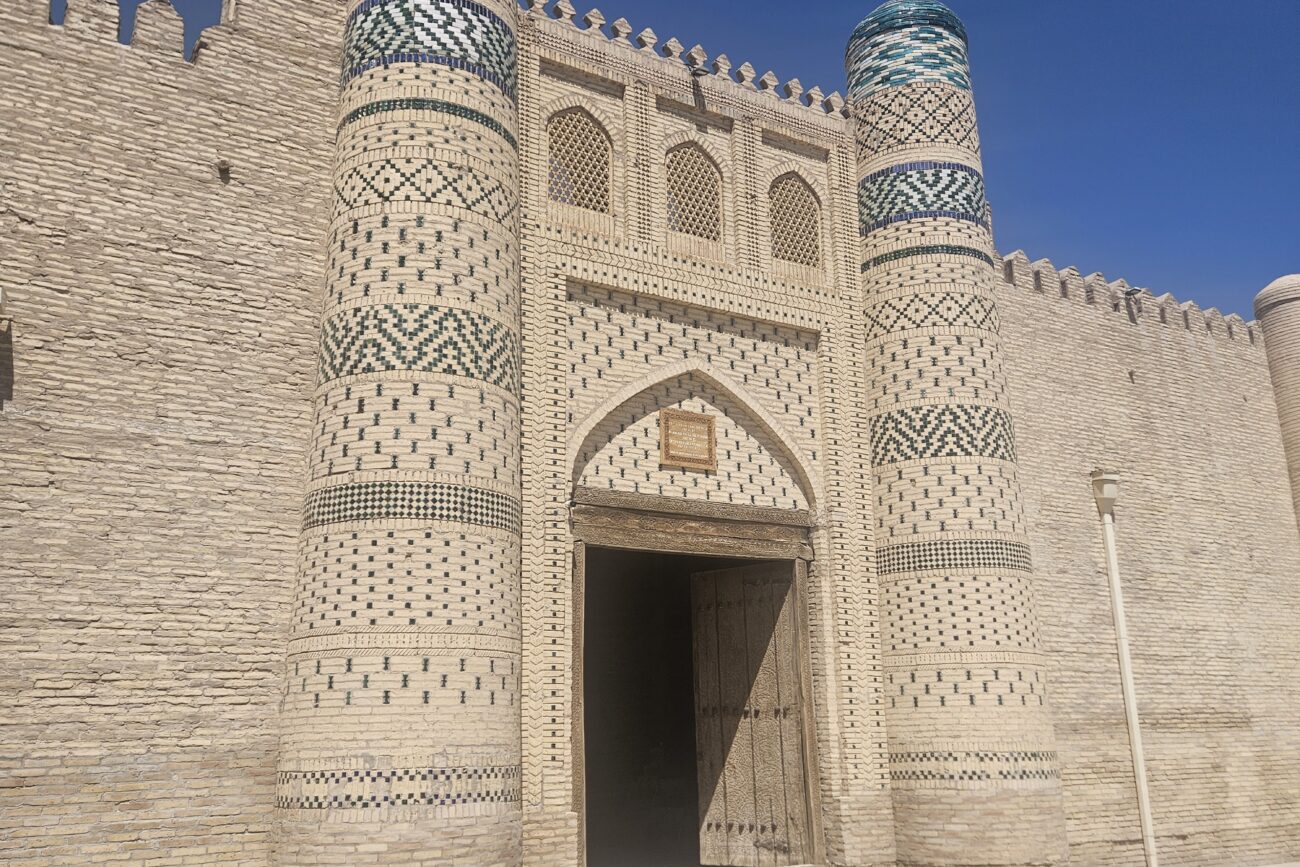
Khiva is the preserved extreme: the inner city Itchan Kala is a UNESCO World Heritage Site and looks as though it’s been transported here from the 18th century — because it has been. Intact city walls, minarets, palaces. Go early in the morning or late in the evening, when the daytime tourist circuit is still quiet.
The Fergana Valley
The Fergana Valley is missing from most travel packages. That’s a mistake. Central Asia’s most fertile valley sits between Kyrgyzstan and Tajikistan, is densely populated and culturally distinct. Rishtan is a ceramics village with a centuries-old craft tradition; the potters export their work around the world but prefer selling locally. Skip the valley and you understand Uzbekistan only halfway.


What You Actually Experience — Beyond the Sights
The sights are what brings you to Uzbekistan. The encounters are what draws you back.
Uzbek hospitality isn’t a gesture made for tourists. Tea isn’t offered because you’re a foreigner — it’s offered because that’s how people deal with each other here. An invitation into a private home, lunch with a family at the market, a conversation with a teahouse owner who has three hours and no hurry: it happens, and it happens more often than you’d expect.
The markets in Tashkent, Samarkand and Bukhara aren’t tourist displays. They work because people actually shop there. Dried fruit, nuts, handmade noodles, spices in open sacks — you buy more than planned and carry it home anyway.
And then there’s the Kyzylkum Desert. A night in a yurt camp at Lake Aydarkul, without street lighting, under a sky that makes every comparison redundant. Hard to describe. You just have to have done it.


Best Time to Visit Uzbekistan
Spring (April to mid-May) and autumn (September to October) are the right months. The weather is pleasant, the fields and orchards around the cities are in full colour, and the main sites are easy to visit.
Summer (June to August) means 40 degrees and above in the desert, 35 degrees in the cities. If you head out early and avoid the midday heat, you’ll manage. If you don’t want to deal with that, wait for autumn.
Winter (December to February) is cold, especially in Samarkand and Bukhara. Fewer visitors, a more intimate atmosphere in the teahouses. Not the obvious time to go — but not impossible either.
Which Trip Is Right for You?
Individual Journey offers four Uzbekistan trips — all personally experienced, all with a local guide and a small group (max. 14 people). The difference isn’t just in the duration, but in how deep you want to go.
Culture and Nature in Uzbekistan — 7 days
The most compact entry point: Samarkand, Bukhara, Tashkent — and a wine tasting at Uzum Farm that surprises most people. For anyone travelling to Central Asia for the first time.
Uzbekistan – Rebirth of a Nation — 10 days
A night in a yurt camp at Lake Aydarkul, a miniature painting workshop in Bukhara with a real master craftsman. For those who want to do more than look.
Uzbekistan for Families with Children — 10 or 14 days, from 2,150 €
The Silk Road as a family journey. The Afrosiyob high-speed train, the Chimgan mountain resort, Khiva as a fairy-tale fortress. For families who believe travel is the best education.
Uzbekistan: From Cities to Deserts — 15 days
With the Fergana Valley, the ancient fortresses of Khorezm, and 15 days to spend. For anyone who wants to understand Uzbekistan fully — and doesn’t stop at Samarkand.
All trips can be adjusted. There’s no shopping cart and no automatic booking confirmation. If you’d like to enquire, just write to us — and we’ll talk.
Practical information
Entry and Visa
Citizens of Germany, Austria and Switzerland don’t need a visa. Visa-free entry is valid for up to 30 days; your passport must be valid for at least three months from the date of arrival.
Anyone staying in a hotel is registered there automatically — it happens in the background. Anyone staying with private individuals needs to register themselves at the local OVIR (registration office) within three days. In practice, this rarely affects travellers with booked accommodation.
The main entry airport is Tashkent (IATA: TAS), with direct connections from Frankfurt, Vienna and Istanbul, among others.
Currency and Costs
The local currency is the Uzbekistani som (UZS). You can exchange money at the airport, in banks or at official exchange offices. The exchange rate was liberalised in 2017 — unofficial street exchanges are no longer necessary and not recommended.
ATMs are available in all larger cities and work reliably with Visa. Cash is still useful, especially at markets and outside the main tourist areas.
Reference prices (2024/2025): lunch at a local restaurant €3 to €8, a taxi across town €1 to €3, a guesthouse in Bukhara €25 to €50 per night. Prices are noticeably lower than Western Europe — but the days of rock-bottom costs are gone. Accommodation and restaurants in popular tourist areas have risen considerably in recent years.
Getting Around
The Afrosiyob high-speed train connects Tashkent, Samarkand and Bukhara — Tashkent to Samarkand in around two hours. The train is comfortable, punctual and should be booked in advance as it’s often sold out.
For shorter distances and connections off the main line: shared taxis (marshrutkas) or regular taxis — agree on the price beforehand. In Tashkent, Yandex Taxi works well.
From Bukhara to Khiva: either a domestic flight to Urgench (then 30 minutes by taxi) or the overnight train. The latter is slow but an experience in itself. Renting a car is possible, though on longer stretches outside the main cities it’s not straightforward — road quality and signage vary.
Health and Safety
Uzbekistan is one of the safer destinations in the region. Petty crime against tourists is rare; police in the main cities are usually friendly and often speak English.
No malaria risk, no mandatory vaccinations for entry. Hepatitis A and typhoid are recommended as travel vaccinations — best discussed with your GP. Don’t drink tap water; bottled water is available everywhere.
Travel health insurance with repatriation cover is something you should have sorted before you fly.
Photography: mosques and bazaars are straightforward. Ask people before photographing them — it works well and often leads to a conversation. Military buildings, train stations and government buildings are best avoided.
Culture and Respect
Uzbekistan is a Muslim country but not a strictly religious one. Islam is part of everyday life — Friday prayers, Ramadan, the architecture of the cities — without political tension. Mosques are open to visitors; remove your shoes, keep shoulders and knees covered. Scarves are often provided at the entrance.
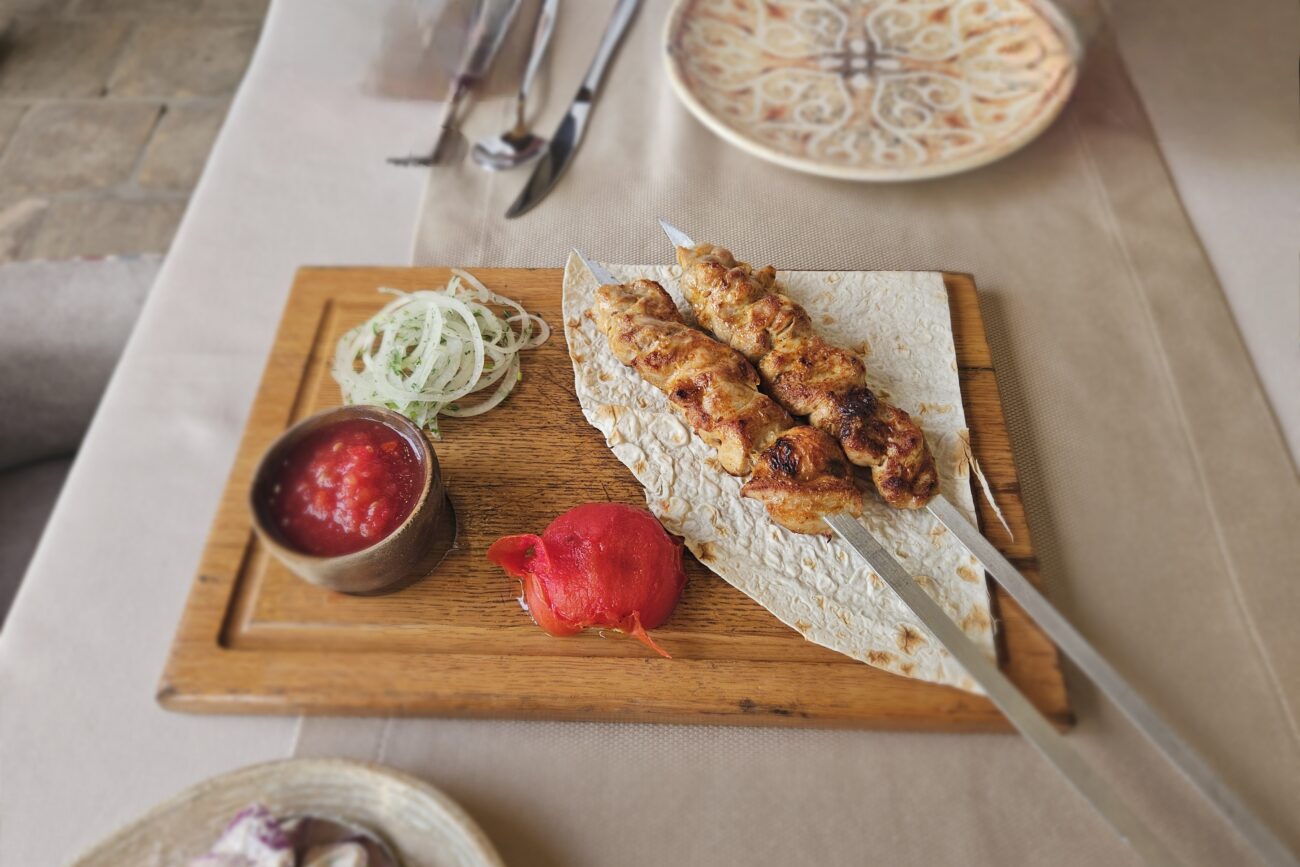
Declining tea is considered impolite. Accept an invitation to eat if you can. The food is worth it: plov, samsa, lagman. The willingness to explain what you’re eating to a stranger is universal in Uzbekistan.
Travelling during Ramadan: restaurants are open, bazaars are running. Iftar — the breaking of the fast after sunset — is a communal experience you sometimes get to witness as an outsider, if you happen to be in the right place.
Language and Communication
The official language is Uzbek, written in the Latin alphabet. Russian is widely understood, especially by older people and in cities. If you have some Russian, it goes a long way.
English is sufficient in Tashkent, Samarkand and Bukhara in the tourist areas. Out in the countryside, communication becomes improvised — hands, gestures, Google Translate downloaded offline. It works and is rarely a real problem.
One Last Thought
Uzbekistan isn’t complicated. It’s just unknown — and that’s a different thing.
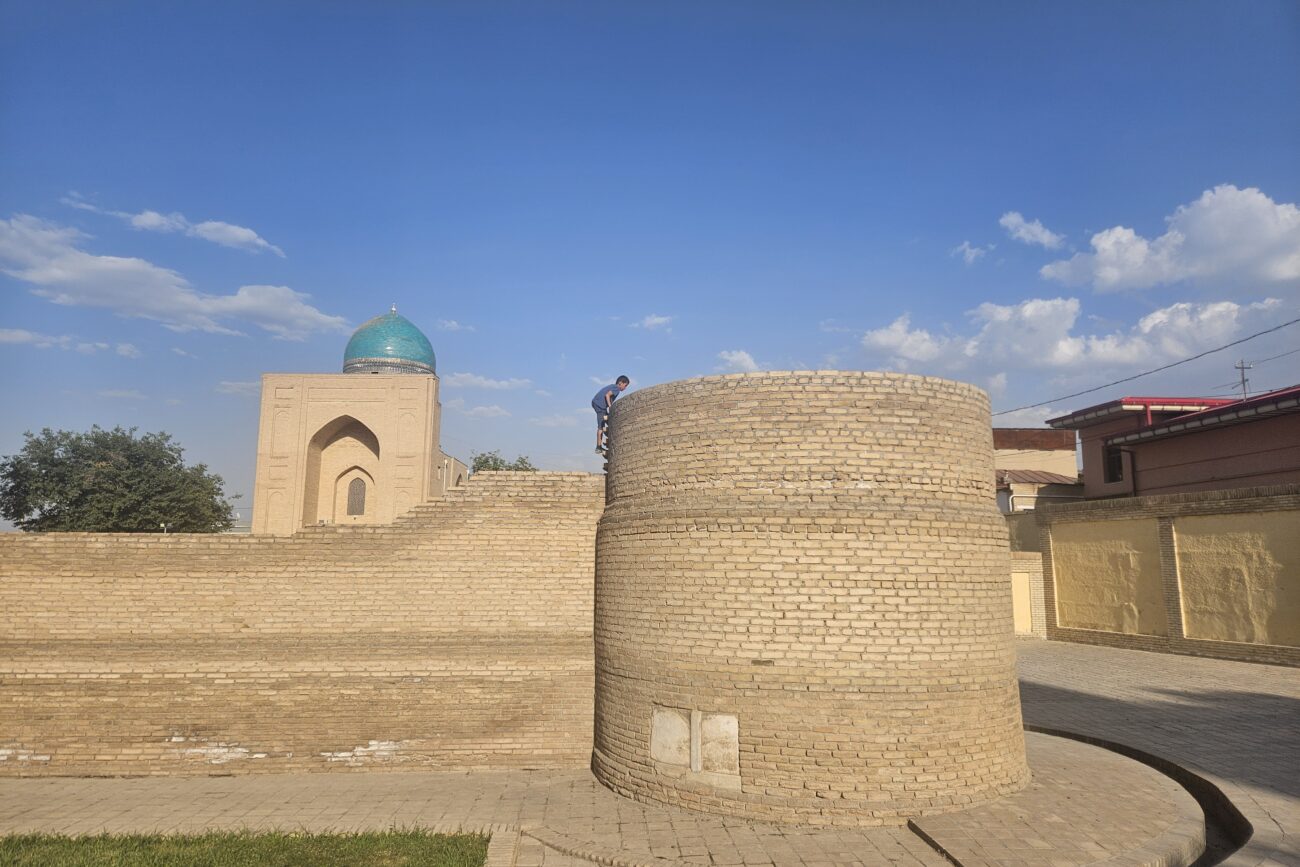
No visa required. The high-speed train runs on time. The accommodation is good. What you can’t plan is what happens once you’ve stopped organising everything: an evening in Bukhara that runs longer than expected, a conversation at a market, a minaret in the morning light that someone built 600 years ago and that’s still standing.
If you have a specific question about which trip fits, just get in touch: